Will a robot mower actually make your lawn easier?
For plenty of American yards, yes. For some, not yet. MowReview helps you work out which kind of yard you have and which kind of robot mower suits it, in plain English and without the tech talk.
MowReview is independent. We don’t test mowers ourselves. We read what manufacturers publish and what independent testers found, then explain what it means for your lawn.
Four things about your yard decide which mower will work
Brand names and “AI” labels matter far less than these. Check all four before you look at a single product.
How much grass you really have
Measure the grass itself, not your whole lot. Leave out the house, driveway, patio and flower beds. A free satellite-map tool with a measuring feature, such as Google Earth, gets you close enough.
Treat the lawn size printed on the box as a best case. Consumer Reports recommends one small model for a lawn noticeably smaller than its maker claims it can handle.
Choose a mower rated comfortably above your measured lawn, not one that only just covers it.
How steep your steepest spot is
Mower makers usually state slope as a percent grade, which sounds far steeper than it is. A 100% grade is 45 degrees, so a mower rated for “80%” is rated for about 39 degrees.
The rating is a maximum under good conditions. Even a manufacturer’s own buying guide admits real performance on hills doesn’t always match the number on the spec sheet.
Look for a rating well above your steepest section, and for all-wheel drive if you have real hills.
How much open sky your lawn sees
Many wire-free mowers find their way using satellite positioning, corrected by a small antenna you set up in the yard. The system is called RTK. It’s very accurate in the open but can lose track under dense trees or close to the house. Ecovacs, which sells RTK mowers, says so itself.
Mowers that also use cameras or laser scanning (called LiDAR) generally cope better in shady yards.
Lots of big trees? Put the type of navigation at the top of your list.
How your lawn is laid out
One open rectangle is easy. Separate front and back lawns, a driveway to cross, narrow side gates and lots of flower beds all make the job harder.
Most wire-free mowers let you map several zones in an app, but tight passages still trip some of them up. Bob Vila’s tester saw one model struggle in the narrow parts of a Florida yard.
Measure your narrowest passage, and check that the mower handles separate zones.
| Percent grade | Degrees (rounded) | How it’s often described |
|---|---|---|
| 15% | 9° | Gentle rise |
| 30% | 17° | Noticeable hill |
| 45% | 24° | Steep lawn |
| 60% | 31° | Very steep |
| 80% | 39° | Steep bank |
| 100% | 45° | The rise equals the distance across |
What a robot mower won’t do for you
Better to hear this before you buy than after.
- Give you perfect edgesMany models leave a strip of grass along fences, walls and beds, so you may still need a trimmer now and then. Some newer models add edge-trimming features to close that gap.
- Stay light and simple to unboxSome of the most capable models are heavy. One reviewer needed two people to lift the box and several hours to assemble a flagship mower.
- Work without your phoneWire-free mowers are usually set up and adjusted through a smartphone app, so you’ll need a phone and a working connection out in the yard.
- Run safely at nightWildlife researchers recommend daytime-only mowing, because small animals are out after dark. Set a daytime schedule from day one.
Who robot mowers suit best
On paper, the best fit is someone who wants the lawn kept tidy all season, has grass that’s mostly open and not extremely steep, and would rather supervise than push a mower.
If your yard is very steep, heavily shaded and split into many small pieces, a robot mower can still work, but choosing one gets harder. Our yard guides take you through it.
From the guides
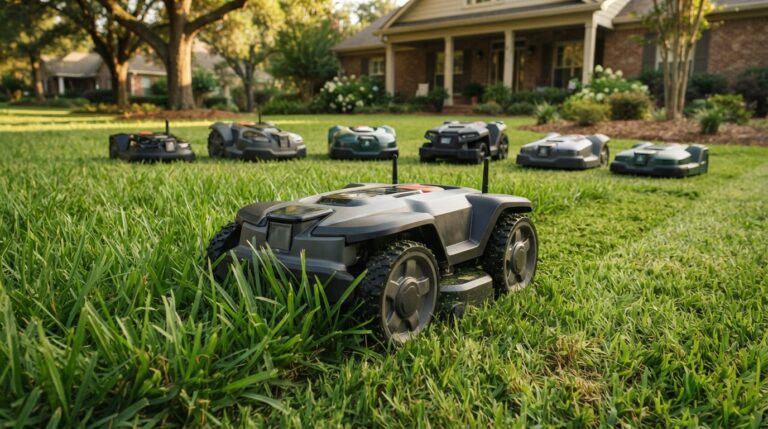
7 Robot Mowers That Cut 4 Inches High (for St. Augustine, Bahia and Tall Fescue)
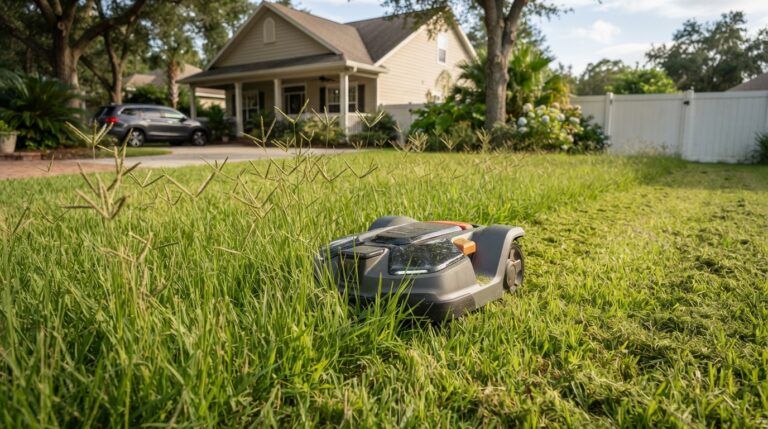
Robot Mowers for Bahia Grass: The Height and the Seedhead Problem
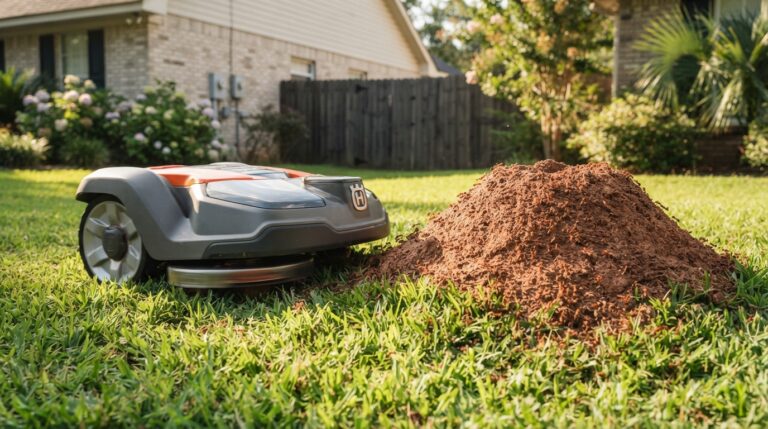
Robot Mowers and Fire Ant Mounds: What Happens When They Meet
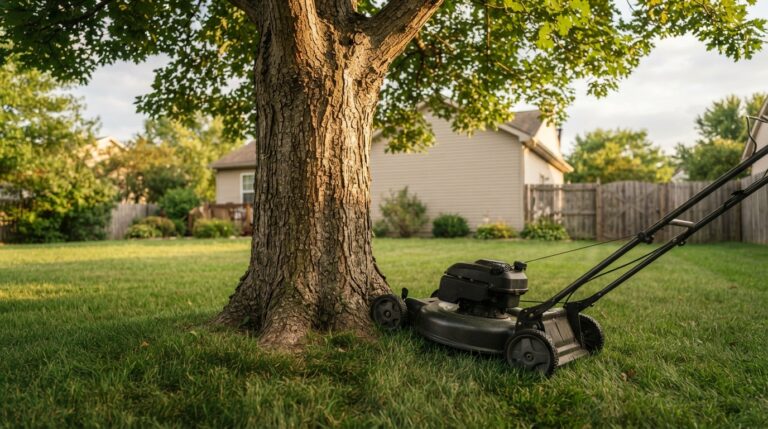
How to Mow Around Trees Without Damaging the Bark: 8 Tips From Tree Experts
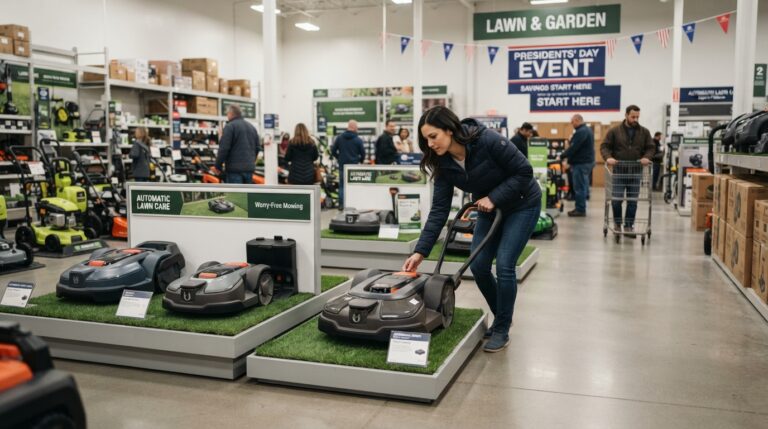
Presidents’ Day Robot Mower Deals: Worth Waiting For?
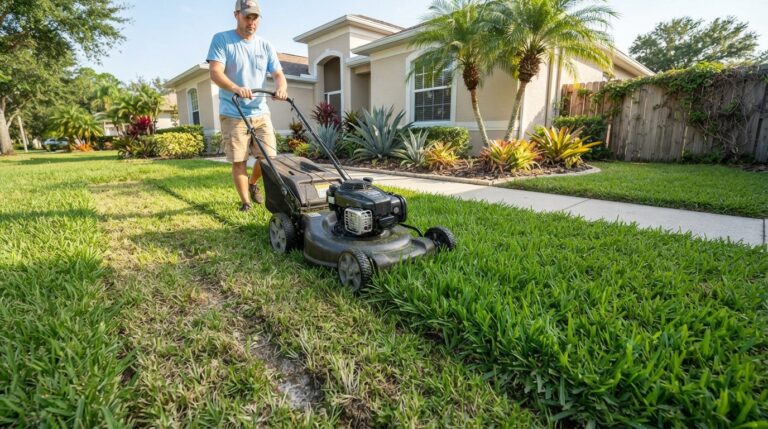
9 St. Augustine Mowing Mistakes, and What UF/IFAS Recommends Instead
Browse by topic
Start with your yard, then pick a mower. That order saves money.
How MowReview works
We haven’t tested these mowers, and we won’t pretend we have. What we do is read the manufacturer specifications, check which models the big U.S. retailers actually stock, and gather what independent testers such as Consumer Reports found. Then we translate all of it for your yard.
Every product we mention comes with a real drawback, and we never quote prices, because they change too often to be trustworthy.
- No invented test results
- A genuine drawback for every product
- No prices that may be out of date
- Sources listed on every guide
Common questions
Are robot mowers safe around grandchildren and pets?
They’re built to a safety standard. In the U.S. that’s a voluntary standard for robotic mowers, ANSI/OPEI 60335-2-107, which the Consumer Product Safety Commission lists on its mower page. It covers the significant hazards of these machines, including misuse that can reasonably be expected.
Obstacle detection still isn’t perfect, so the simple rule is to run the mower when children and pets aren’t in the yard, and to schedule it for daytime.
Do I still have to lay a wire around my lawn?
Not necessarily. Most newer models are wire-free and find their way with satellite positioning, cameras, laser sensors or a mix of them. Wired models are still sold and often cost less, but installing the wire is real work. PCWorld recommends paying a professional to bury it if you go that way.
Will a robot mower handle my hill?
Check two things: your steepest spot and the mower’s slope rating. Remember that ratings are usually given in percent, not degrees, and that they’re maximums. Our table above shows how the two compare. Mowers with all-wheel drive are the ones built for real hills.
Is a robot mower cheaper than paying a lawn service?
It depends on what you pay now, and national figures vary a lot between sources. Angi puts professional mowing at roughly $49 to $203 per visit, with most homeowners paying around $123. HomeGuide quotes $30 to $85 per visit for a lawn of an eighth to a quarter of an acre. Your local rate and your season length matter more than any national average.
What happens when it rains?
Many robot mowers have a rain sensor or a weather setting and head back to their charging station when it rains. Exactly how each model handles wet weather varies, so check the manual before you buy if your area gets frequent storms.
Sources for this page
- House Digest: Consumer Reports’ pick for small yards (2026)
- Mammotion: Best robot lawn mower 2026
- Ecovacs: RTK vs. LiDAR, key differences explained
- Bob Vila: The best robotic lawn mowers of 2026
- Reviewed: Best robot lawn mowers
- Men’s Journal: Four reasons 2026 robot mowers are different
- University of Oxford: Hedgehog safety test for robotic lawnmowers
- U.S. Consumer Product Safety Commission: Mowers, voluntary standards
- ANSI: ANSI/OPEI 60335-2-107-2020 summary
- PCWorld: Best robot lawn mowers
- Angi: Lawn mowing cost (2026 data)
- HomeGuide: How much does lawn care cost? (2026)
- Wikipedia: Robotic lawn mower