How MowReview makes money: As an Amazon Associate, MowReview earns from qualifying purchases, at no extra cost to you. We don’t test mowers ourselves; we explain what manufacturers and independent testers report. How we research
Quick answer
Through fall, raise the cutting height, mow later in the day once dew has dried, and keep the lawn clear of fallen branches. Pause the mower for a few weeks if you overseed, and stop for the season when the grass stops growing rather than on a set date. Then clean it, fit new blades and store it indoors.
Fall is the season robot mower owners get least guidance on. Spring setup is well covered, winter storage is well covered, and the eight weeks in between are where most of the small decisions actually are.
This is a seasonal routine, not a storage guide. When you’re genuinely finished for the year, the winter storage guide takes over.
1. Raise the cutting height
The single most useful fall change. A higher setting helps in four ways at once: the mower rides over leaf litter and uneven ground, longer grass blades capture more of the weakening light, taller grass shades out late weeds, and the mower is less likely to ground out on soft, wet soil.
Raise it gradually rather than in one jump, keeping to the usual principle of removing no more than about a third of the blade at a time.
2. Move mowing later in the day
Fall mornings are wet. Dew sits far longer than in summer, and a damp lawn means poorer traction and more clippings sticking to the underside. Segway warns that damp clippings promote corrosion of blade screws and charging contacts.
Shift the schedule to early or mid afternoon, when the lawn has dried. Keep it in daylight regardless: Oxford researchers recommend daytime-only mowing, because many small animals are active after dark, and fall is exactly when wildlife is looking for somewhere to shelter.
3. Reduce how much, not how often
Growth slows through fall, so the mower doesn’t need as many hours. Shorten each session rather than dropping to one long run a week. Little and often suits leaf fall, and it keeps the lawn even as growth tails off.
4. Walk the lawn after every windy spell
Fall brings branches, twigs, acorns and conkers down, and leaves hide them. A branch hidden in leaf litter can damage blades, the blade disc or the drive. One walk around before the next mow prevents nearly all of it.
Our guide to robot mowers and fall leaves covers leaf handling in detail.
5. Pause for overseeding
Fall is the main overseeding window for cool-season lawns. New seed needs to be left alone: it has to stay in contact with the soil, germinate and root before anything drives over it.
So pause the mower, or mark the seeded area as a no-go zone in the app if you’ve only done part of the lawn. Resume when the new grass is established and long enough to be cut at your raised fall height. Your county’s Cooperative Extension office publishes timing and recovery guidance for grasses in your area, which beats any national rule of thumb.
Aerating too?
Core aeration leaves plugs and soft, opened ground behind. Give the lawn time to settle before the mower runs over it, and clear or break down the plugs first so they don’t jam the deck.
6. Clean it more often than in summer
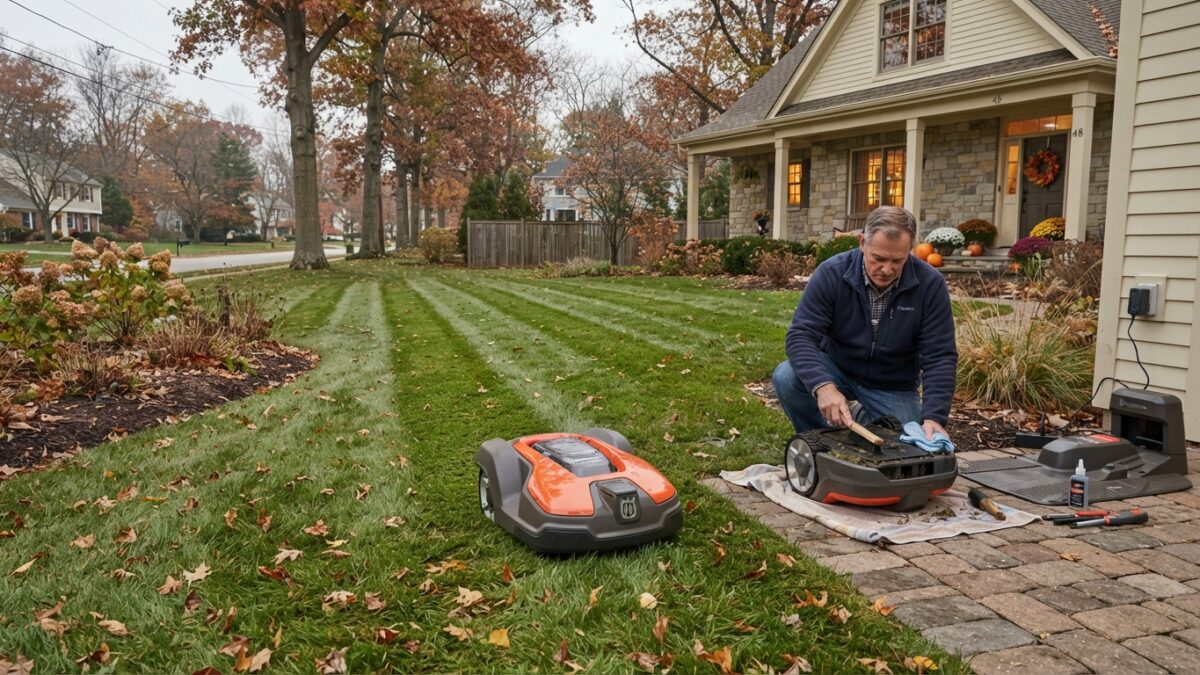
Wet grass, leaf pulp and mud build up much faster in fall. Check underneath weekly rather than fortnightly, clear packed debris from around the blade disc and wheels, and wipe the charging contacts. Keep leaves from piling up around the charging station, or the mower will struggle to dock.
Check your manual before using water, since water resistance varies between models.
7. Know when to stop
The signal isn’t a date, it’s the grass. Stop when growth has genuinely stopped for the season, which in the North may be October or November and in the South considerably later.
Signs it’s time:
- The lawn looks the same a week after mowing as it did the day after.
- Hard frosts have started. Don’t mow frosted grass, since driving over frozen blades damages them.
- The ground is staying soft and wet enough that the mower is leaving marks.
8. Finish the season properly
When you’re done, do the end-of-season job straight away rather than leaving the mower docked outside through November. Clean it thoroughly, fit new blades and screws, which Husqvarna recommends doing before storage, check the wheels and body for wear, charge it as your manual specifies, and bring it indoors somewhere dry and above freezing.
Doing it now rather than in spring means next season starts with a sharp, clean, ready mower instead of a parts order. The full routine, including the parts of the charging station and antenna that stay outside, is in the winter storage guide.
A fall calendar, roughly
| Stage of fall | What to do |
|---|---|
| Early fall | Raise the cutting height a step; move mowing to the afternoon; overseed if you’re going to, and pause the mower while you do |
| Mid fall | Shorten sessions as growth slows; walk the lawn after windy spells; clear heavy leaf falls by hand; clean the mower weekly |
| Late fall | Watch for growth stopping and for hard frosts; stop mowing; clean, fit new blades, charge and store indoors |
Southern lawns run on a later schedule, and warm-season grasses have their own requirements. See St. Augustine, Bermuda and zoysia.
Questions
Should I raise the cutting height in fall?
Yes, a step at a time. A higher cut helps the mower ride over leaf litter and soft ground, gives the grass more blade to capture weaker light, and reduces the chance of scalping. Avoid dropping or raising the height dramatically in one go.
Can I use a robot mower after overseeding?
Not straight away. New seed needs contact with the soil and time to germinate and root before anything drives over it. Pause the mower, or set a no-go zone over the seeded area, and resume once the new grass is established. Your local Extension office can advise on timing for your grass.
Should I mow when there’s frost on the grass?
No. Frozen grass blades are damaged by anything driving over them, and hard frosts are a sign the season is ending anyway. Once frosts become regular, it’s time to clean the mower and put it away.
Sources
- Segway Navimow: Maintenance and winterizing (damp clippings, corrosion, contacts)
- Husqvarna: Automower maintenance and storage (blades and screws, wear checks)
- Husqvarna US support: Winter storage guide (indoor storage, above freezing)
- University of Oxford: Hedgehog safety test for robotic lawnmowers (daytime mowing, checking for wildlife)
- Mammotion: Preparing a robot mower for winter storage