How MowReview makes money: As an Amazon Associate, MowReview earns from qualifying purchases, at no extra cost to you. We don’t test mowers ourselves; we explain what manufacturers and independent testers report. How we research
Quick answer
Work out what you pay a service each year: your price per visit, times visits per month, times the length of your growing season. Compare that with the mower’s price plus running costs. National service figures vary widely, from around $30 to $203 per visit depending on the source, so your own bill is the only number that matters.
Most comparisons of this kind are written by people selling mowers, and they tend to use a high service cost and a low mower cost. This page gives you the method instead, so the numbers are yours.
Step 1: What you actually pay now
Take your bill, not a national average:
Price per visit × visits per month × months of growing season = your yearly cost.
Someone paying $50 a visit, fortnightly, over a seven-month season pays about $700 a year. Someone paying $120 a visit weekly over a nine-month Southern season pays several times that. This is why the same mower is an easy decision in Georgia and a marginal one in Maine.
If you don’t currently pay a service, national figures give you a sense of what you’d avoid, and they disagree:
| Source | Range | Typical |
|---|---|---|
| Angi | $49 to $203 | Around $123 |
| HomeGuide | $30 to $85 for an eighth to a quarter acre | Varies by lawn size |
Two reputable sources, very different ranges. Treat both as context, not as your number.
Step 2: The mower’s cost
We don’t quote product prices on MowReview, because they change constantly and an out-of-date figure is worse than none. Check the current price for the models that fit your yard and use that.
What matters for this comparison is that the price depends heavily on your yard, not your preferences. A small flat lawn needs a much cheaper mower than a steep acre with tree cover, so do the fit work first. Our buying checklist narrows it down.
Step 3: The running costs people forget
A robot mower isn’t free to keep. Budget for:
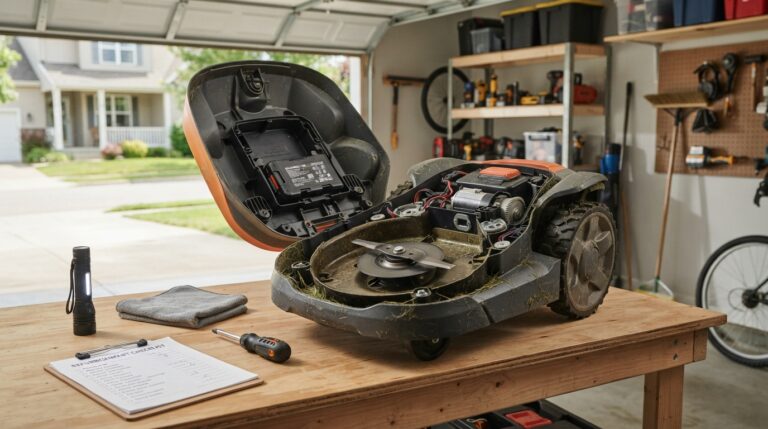
- Replacement blades. These are consumables, changed regularly through the season. Husqvarna recommends fitting new blades before winter storage each year.
- Electricity, a small but real cost for charging through the season.
- A replacement battery at some point. This is the main wearing part.
- A possible subscription. Some mowers use a cellular connection for positioning or anti-theft tracking, which may carry a fee once any included period ends. TechRadar notes Mammotion includes three years of free cellular data with the LUBA 3, which tells you the charge exists after that.
- Servicing or repairs, particularly out of warranty.
- Edge trimming, either your time or someone else’s. Many mowers leave a strip along walls and beds.
Why we don’t give you annual running-cost figures
We looked. Almost every published figure comes from a mower manufacturer or a retailer, and they range from roughly $20 a year to several hundred for the same categories of cost. We haven’t found independent testing that settles it, so we won’t pick a number to sound confident. Get blade and battery prices for the specific model you’re considering, and ask the manufacturer directly whether any subscription applies after the first year.
Step 4: Compare over the same period
A robot mower is one payment up front plus running costs; a service is a payment forever. So compare over a fixed period, say five years:
- Service: your yearly cost × 5, allowing for price rises.
- Mower: purchase price + (running costs × 5), including one likely battery replacement.
If the service column is much larger, the decision is easy. If they’re close, the money isn’t what should decide it.
What the money comparison leaves out
- Frequency. A service comes weekly or fortnightly. A robot mows most days, which keeps the lawn at a steadier height and returns fine clippings to the soil.
- The extras a service does. Many crews also edge, blow paths clear and tidy up. A robot mower does none of that, and one reviewer of an Ecovacs GOAT put it plainly: it cuts mowing time dramatically, but it doesn’t handle everything.
- Who solves problems. With a service, someone else deals with the rain, the broken part and the missed week. With a mower, that’s you.
- Resale and theft. A mower is an asset that can be sold, and also stolen, which is why anti-theft features exist.
The middle option
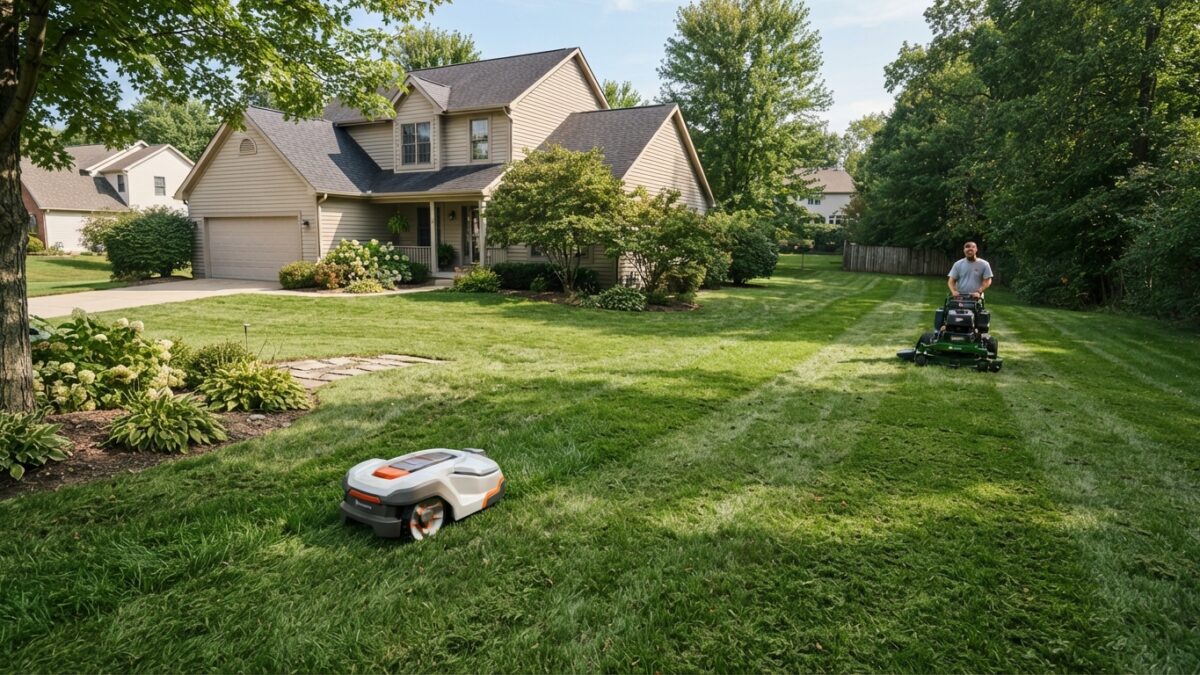
Plenty of people do both: a robot mower handles the routine cutting, and a service comes a few times a season for edging, tidying and seasonal work. That usually costs less than a full service contract while keeping the finish you’re used to.
Questions
How long until a robot mower pays for itself?
Divide the mower’s price by what you currently pay a service each year. Someone paying a large yearly bill may break even in a season or two; someone paying a little for a small lawn may take several years. Add running costs to the mower side before you decide.
Will I still need a lawn service for edging?
Possibly. Many robot mowers leave a strip along fences, walls and beds, though some newer models include an edge trimmer. Plenty of owners keep a service for occasional tidying rather than routine mowing.
Is a robot mower cheaper than mowing it myself?
Not usually in pure cash terms, since your own labor is free. What you’re buying is the hours back, and not having to do the job when it’s hot, wet or physically hard. That’s a fair trade for many people, but it isn’t a saving.
Sources
- Angi: How much does lawn mowing cost? (2026 data)
- HomeGuide: How much does lawn care cost? (2026)
- Husqvarna: Automower winter maintenance and storage (annual blade replacement)
- TechRadar: Mammotion LUBA 3 AWD 3000 review (included cellular data)
- BGR: Ecovacs GOAT A3000 LiDAR Pro review (edges and limits)
Numbers stack up? Check the fit next
Cost only matters once you know which mowers can actually handle your yard.