How MowReview makes money: As an Amazon Associate, MowReview earns from qualifying purchases, at no extra cost to you. We don’t test mowers ourselves; we explain what manufacturers and independent testers report. How we research
Should You Wrap Shrubs in Burlap for Winter? Screen vs Wrap, and What Extension Experts Say
Quick answer
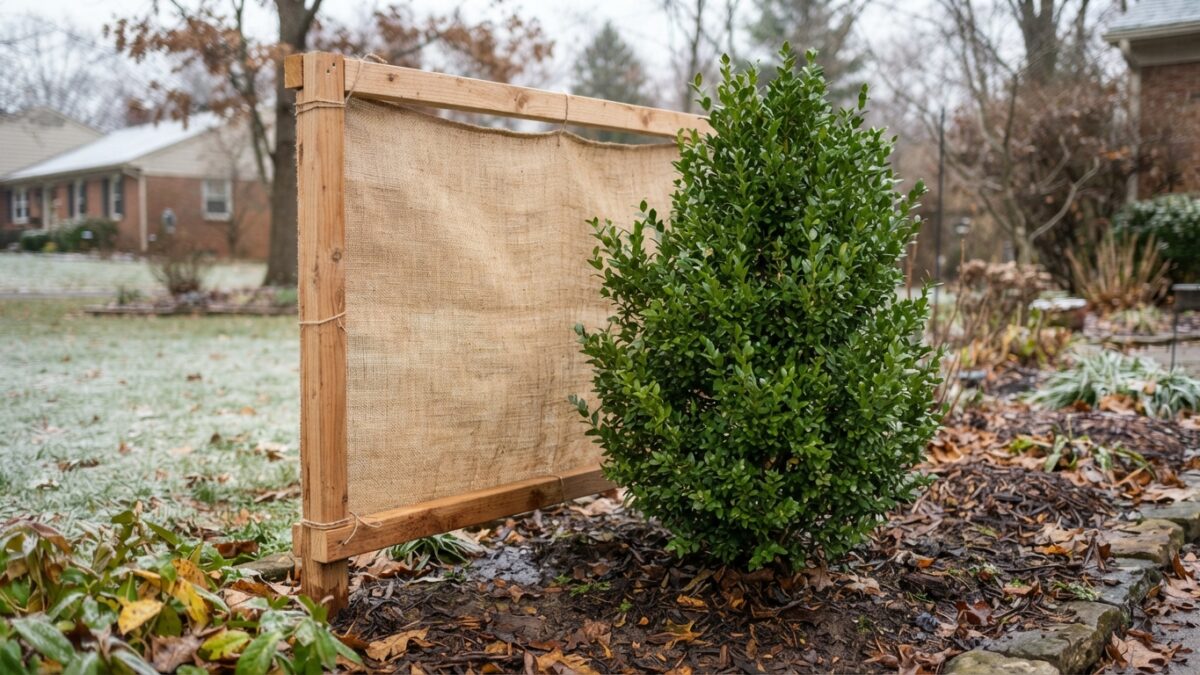
Most established shrubs don’t need burlap. It’s worth putting up for evergreens such as arborvitae, yews, boxwood and young conifers in windy, sunny or salt-sprayed spots, where winter wind and sun dry out the foliage (“winter burn”). The better method is usually a burlap screen on stakes, not a tight wrap. Set it on the south, southwest and windward sides, a few inches taller than the plant, and leave the top open. Water well before the ground freezes. Antidesiccant sprays are optional: extension experts disagree on whether they help.
Every spring, a lot of evergreens along US driveways and foundations wake up brown on one side. It’s usually winter burn: on sunny, windy winter days the foliage loses water, but the plant can’t replace it from frozen soil. Burlap helps because it blocks the wind and sun that do the drying, but only if it’s put up the right way.
This guide covers which shrubs need protection, the screen vs wrap question, how to set it up, and the antidesiccant debate, using Illinois, Nebraska and New Hampshire extension guidance. MowReview quotes no prices and hasn’t tested the products mentioned. How we research explains why.
Which shrubs need burlap?
| Situation | Burlap? |
|---|---|
| Newly planted or young evergreens | Yes: UNL Extension says young plants with underdeveloped roots are most at risk |
| Evergreens on the south or west side of a light-colored house, or beside pavement | Yes: UNL says reflected heat and sun raise the risk |
| Very windy, exposed sites | Yes: Illinois Extension recommends windbreaks there |
| Shrubs beside salted roads | Yes: UW-Madison says burlap screening protects plants from road spray |
| Arborvitae where deer browse | Often: UNH says burlap may also deter deer |
| Established deciduous shrubs in sheltered spots | Usually not needed |
Screen or wrap?
The extension advice leans toward screens. UNL Extension’s Kelly Feehan recommends a burlap screen on stakes set a few inches taller than the plant, and warns against draping burlap over the top: “snow can sag it onto branches,” and it limits air circulation. UNH Extension describes windbreaks of burlap or canvas attached to frames around plants.
Wrapping has a place too. UNH says full wrapping suits plants like arborvitae, especially where deer are a problem. If you wrap, Illinois Extension’s Candice Miller says to leave the top open, since the plant still needs light and air, to use a breathable material rather than plastic, and not to wrap so tightly that it causes injury.
How to put up a burlap screen
- Water first. Illinois Extension says the soil should be properly watered just before the ground begins to freeze. UNH suggests watering thoroughly and consistently through fall, moistening the soil 8 to 10 inches deep weekly.
- Wait for cold weather. Put the screen up once the plant is dormant and before the harshest winter wind, usually late November or early December in northern states.
- Drive stakes on the south, southwest and windward sides, a little away from the branches. Both Illinois and UNL recommend those sides.
- Make it taller than the plant. UNL says a few inches taller.
- Staple or tie the burlap to the stakes, stretched taut, as Illinois describes.
- Leave the top and the north side open for light and air.
- Take it down in spring once the worst wind is over and the soil has thawed.
Brown in spring anyway?
Illinois Extension says that if only the foliage died, the plant should leaf out again in spring. If the woody tissue died, it must be replaced. Wait until late spring before deciding: scratch a twig, and green underneath means it’s alive.
The antidesiccant debate
Antidesiccant (or antitranspirant) sprays coat foliage in a waxy film meant to slow water loss. Extension experts don’t agree on them:
- UNL Extension: “mixed reviews in scientific literature,” with a concern that extra water held in foliage may raise the risk of freeze injury.
- Illinois Extension: “many studies, however, have shown them to be ineffective.”
- UNH Extension: “there is evidence that anti-dessicants can be helpful when applied correctly.”
If you use one, UNL’s guidance is to apply after plants are fully dormant (usually after Thanksgiving), only above freezing with 3 to 4 hours of drying time, covering both leaf surfaces, and to plan two applications because the film can wear off in about 5 weeks. Avoid blue spruce and other blue, waxy evergreens: UNL says the products wash away the wax that is the plant’s natural protection. Check labels, too: UNL notes the Vapor Gard label says not to use it on arborvitae.
The picks
The screen material
Natural burlap roll
- MaterialNatural jute burlap
- WhyBreathable windbreak
- SizeChoose a width a few inches over the plant’s height
Illinois Extension says to use a breathable material, not plastic. Natural burlap blocks wind and sun while letting air through, and it’s reusable for a few winters.
Good for
- Screens on the south, southwest and windward sides
- Protecting shrubs from road salt spray
Less good for
- Draping over the top: UNL says snow can sag it onto branches
- Wrapping tightly: Illinois says it can cause injury
To hold the screen up
Wooden garden stakes
- HeightTaller than the plant plus the depth in the ground
- PlacementAway from the branches
- FixingStaple or tie the burlap on
Illinois Extension’s method is to drive stakes into the ground and stretch burlap between them. Buy stakes long enough that the screen stands a few inches taller than the shrub, as UNL recommends.
Good for
- Free-standing burlap screens
- Reusing year after year
Less good for
- Frozen ground: drive them before the soil freezes
- Very tall hedges, which need sturdier posts
Optional: antidesiccant spray
Wilt-Pruf plant protector
- TypeAntidesiccant concentrate
- WhenAfter full dormancy, above freezing
- CoatsBoth leaf surfaces
For owners who want an extra layer on boxwood, rhododendron or young conifers in exposed spots. Follow UNL’s timing: after dormancy, on a day above freezing, with a second coat later in winter.
Good for
- Young or newly planted evergreens in windy, sunny spots
- Broadleaf evergreens such as boxwood
Less good for
- Blue spruce and waxy evergreens: UNL says sprays wash away their protective wax
- Guaranteed results: Illinois says many studies found these products ineffective
- One-and-done: UNL says the film can wear off in about 5 weeks
Questions
Should I wrap my shrubs in burlap for winter?
Only exposed or vulnerable evergreens need it. Extension experts recommend burlap mainly as a windbreak for evergreens in windy, sunny or salt-sprayed spots. Established plants in sheltered locations usually don’t need it.
Is a burlap screen better than wrapping?
Often, yes. University of Nebraska-Lincoln Extension recommends a burlap screen on stakes a few inches taller than the plant, on the south, southwest and windward sides, and advises against draping burlap over the top, because snow can sag it onto branches and it limits air circulation.
Which side of a shrub should I put burlap on?
The south, southwest and windward sides. Illinois Extension and UNL Extension both recommend these sides, because winter sun and wind cause the most drying.
Can I wrap a shrub in plastic instead of burlap?
No. Illinois Extension says to use a breathable material, not plastic, to leave the top open for light and air, and to avoid wrapping so tightly that it causes injury.
Do antidesiccant sprays work on evergreens?
The evidence is mixed. UNL Extension describes mixed reviews in the scientific literature, Illinois Extension says many studies have shown them to be ineffective, and UNH Extension says there is evidence they help when applied correctly.
When should I put burlap on shrubs?
Once the plants are dormant and before the coldest, windiest weather. Water them well first: Illinois Extension says to make sure the soil is properly watered just before the ground freezes.
The short version
Water evergreens well before the ground freezes. Put burlap up only where plants are young, exposed to wind and sun, or splashed with road salt. Use a screen on stakes on the south, southwest and windward sides, a few inches taller than the plant, with the top open. If you wrap, keep it loose and breathable. Antidesiccants are a maybe at best, and never on blue spruce.
Protecting the yard this winter
Salt, voles and snow mold, and how to stop them.