How MowReview makes money: As an Amazon Associate, MowReview earns from qualifying purchases, at no extra cost to you. We don’t test mowers ourselves; we explain what manufacturers and independent testers report. How we research
Quick answer
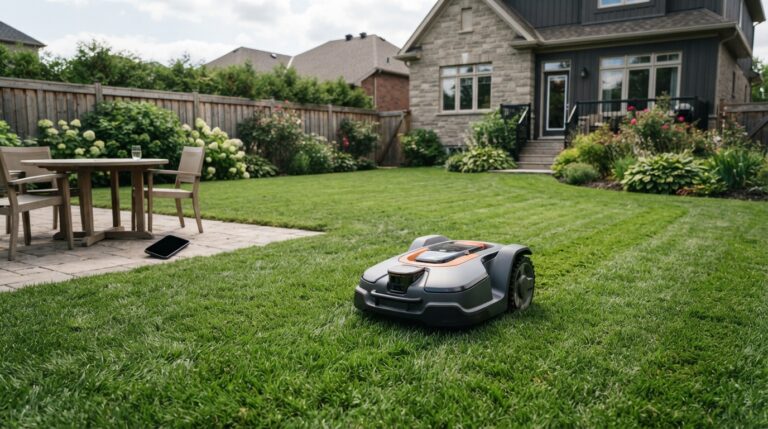
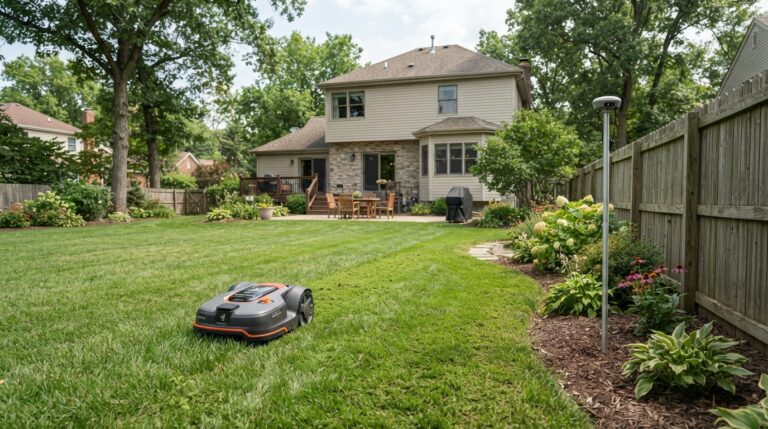
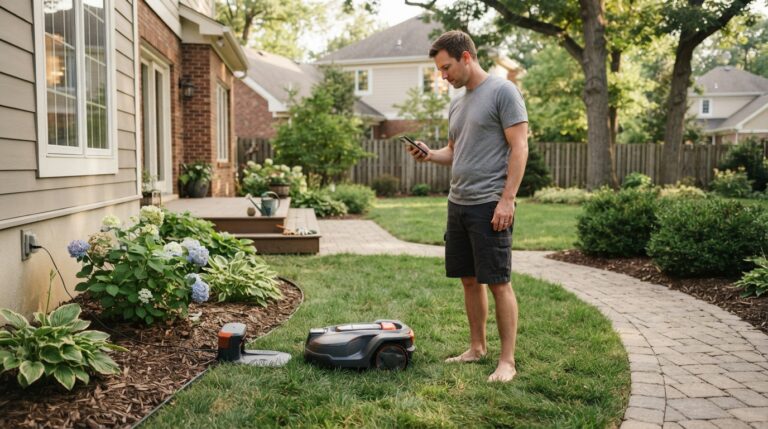
On a robot mower, “AI” almost always means two things: a camera that recognizes objects so the mower can steer around them, and software that plans an efficient route. That’s genuinely useful. It is not a machine that understands your yard, and it is not a safety system. Detection can and does miss things, so keep children and pets out of the yard while the mower runs.
Every robot mower is now sold as AI-powered. The phrase is doing so much work in the marketing that it’s stopped meaning anything useful to a buyer. Here’s what’s actually behind it.
What manufacturers mean by “AI”
1. Object recognition
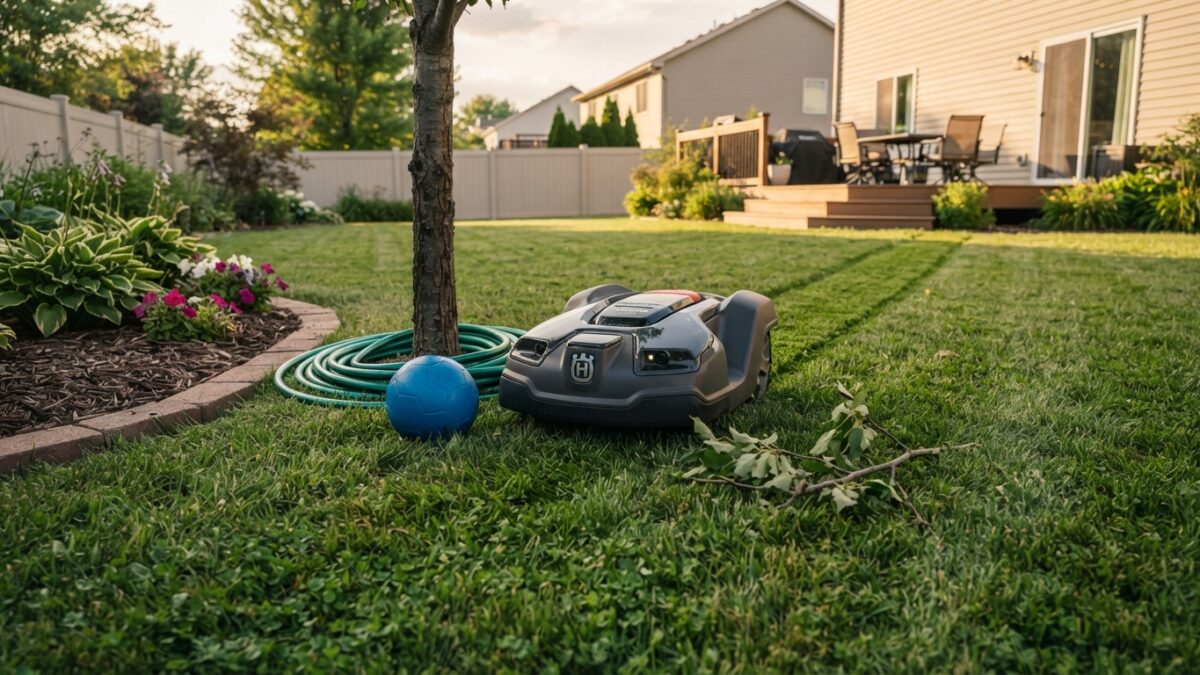
A camera on the front of the mower, with software trained on images, decides what it’s looking at: a hose, a ball, a shoe, a pet, a tree. Segway says its system recognizes over 150 object types. When it recognizes something, the mower steers around it instead of bumping into it.
This is real and it works well enough to matter. It’s also the same technology as a phone camera identifying a face, rather than anything that thinks.
2. Route planning
Working out an efficient pattern to cover the lawn, rather than bouncing around at random the way older mowers did. Some mowers use this to mow in neat parallel lines, and to decide when to return to charge.
3. Mapping assistance
Some apps can identify the edge of a lawn from imagery and draw a boundary for you. Segway offers an assisted mapping feature that identifies clear lawn edges and maps the area itself, which saves you walking the whole perimeter.
What it isn’t
- It isn’t understanding. The mower doesn’t know that’s your grandchild’s bike or that the roses are new. It matches shapes against training data.
- It isn’t learning your yard over time, in most cases. It follows the map you made and the rules it was given.
- It isn’t a safety system. This is the important one, and it’s covered below.
- It isn’t navigation on its own. Knowing where the mower is comes from satellites, laser scanning or a boundary wire. Cameras help, but “AI” and “navigation” are not the same thing. See how the navigation types compare.
How well does detection actually work?
The most rigorous test we’ve found comes from the University of Oxford, where researchers developed a safety test for robotic mowers using a dummy hedgehog. In one case a mower detected the dummy and steered around it without contact. But the result couldn’t be reproduced when the test was repeated, and the researchers suggested the mower may have been avoiding a larger obstacle by chance rather than recognizing the animal.
That’s the honest picture: detection helps, and it isn’t reliable enough to depend on. A system that recognizes something four times out of five is a useful feature and a poor guarantee.
Never treat obstacle detection as child or pet safety
The rule stays the same regardless of what the box claims: run the mower when children and pets aren’t in the yard, and schedule it for daylight hours. Our safety guide covers this in full, including what the U.S. safety standard does and doesn’t cover.
When AI features genuinely help
- Yards with clutter. If toys, hoses and furniture are regularly on the lawn, object recognition saves the mower bumping into or dragging them.
- Avoiding damage to things you care about. Steering around rather than nudging is better for garden ornaments and young plants.
- Saving setup time. Assisted mapping shortens the fiddliest part of installation.
- In shade, alongside other systems. Cameras can help hold position where satellite signal weakens, which is why the most capable mowers combine several approaches.
If you live in a managed community, it’s also worth checking what your HOA rules say before buying.
How to judge the claim on a box
Ignore the word and ask three questions:
- What does it detect, specifically? A stated list of object types is a real claim. “AI-powered” alone is not.
- What does it do when it detects something? Steer around it, or stop and wait?
- What happens in poor light and rain? Cameras depend on seeing, so ask about dusk, shadows and wet weather.
It also helps to know which company you’re buying from, since that decides who services the mower later. See our comparison of the brands.
And judge the mower on the things that decide whether it works in your yard: rated lawn size, slope rating, navigation type and weight. Those are checkable facts. “AI” is a category, not a specification.
Questions
Will an AI robot mower avoid my dog?
It may well steer around a dog it detects, and many mowers list pets among the objects they recognize. Don’t rely on it. Oxford researchers found a mower’s avoidance of a dummy animal couldn’t be reproduced on a repeat test. Mow when pets are indoors if yours is curious about the machine.
Can a robot mower see a garden hose?
Hoses are among the objects camera-equipped mowers are trained to recognize, and detection has improved a lot. It’s still worth picking up hoses, cables and toys before a mow, since a missed one can damage both the item and the mower.
Is an AI mower worth paying more for?
If your lawn regularly has objects on it, camera-based detection saves hassle and damage. If your lawn is clear and open, the money is usually better spent on the specifications that decide whether the mower can do the job: coverage, slope rating and navigation suited to your tree cover.
Sources
- University of Oxford: Researchers develop hedgehog safety test for robotic lawnmowers
- Amazon listing: Segway Navimow i110N (object types detected, assisted mapping)
- Ecovacs: LiDAR vs. RTK robot lawn mowers (what each sensor contributes)
- PCWorld: Ecovacs GOAT A3000 review (camera and LiDAR in practice)
- U.S. Consumer Product Safety Commission: Mowers, voluntary standards
Judge mowers on the checkable things
Lawn size, slope, navigation and weight decide whether a mower works in your yard. The checklist covers all ten.