How MowReview makes money: As an Amazon Associate, MowReview earns from qualifying purchases, at no extra cost to you. We don’t test mowers ourselves; we explain what manufacturers and independent testers report. How we research
Quick answer
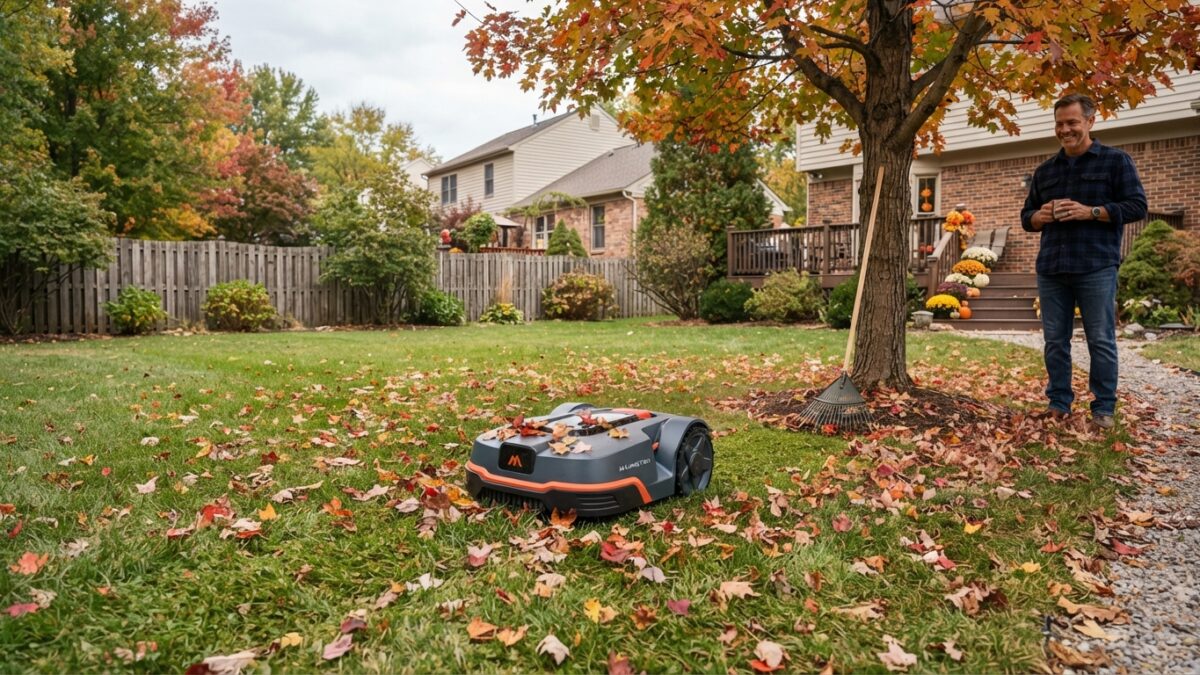
A robot mower can chop a light scattering of dry leaves into the lawn, which is genuinely good for the grass. It is not a leaf collector. Deep, wet or matted leaves will cover the grass, clog the deck and confuse camera-based obstacle detection, so clear the heavy falls yourself and let the mower handle what’s left.
This is the question every robot mower owner hits in their first October. The short version is that expectations matter more than settings: a robot mower mulches leaves as a side effect of cutting grass, and it was never designed to clear a yard under a mature maple.
No purchase is recommended on this page.
What a robot mower does well with leaves
Robot mowers cut a little and often with small, fast blades, and they drop the clippings back into the lawn rather than collecting them. Applied to a light scattering of dry leaves, that works in your favor: the leaves are chopped small, fall between the grass blades and break down into the soil.
Because the mower runs most days, it also handles leaves gradually as they fall, rather than letting a week’s worth build up the way a weekly mow would.
Where it stops working
- Depth. Once leaves cover the grass rather than sitting among it, the mower is cutting leaves instead of lawn, and the layer that remains still blocks light from the grass beneath.
- Wet leaves. Damp leaves clump, stick to the underside and mat down. Segway warns that damp clippings are acidic and promote corrosion of blade screws and charging contacts, and that dried dirt can jam wheels and the cutting deck. Wet leaf pulp does exactly this.
- Big leaves. Sycamore, maple and oak leaves are large enough to behave like obstacles rather than debris.
- Obstacle detection. Camera-based systems recognize objects in order to steer around them. A lawn covered in leaves is a lawn covered in things the camera has to interpret, which can mean a more hesitant mower.
- Traction. A layer of wet leaves on a slope is slippery. If you already mow near your mower’s slope rating, fall is when it will start slipping.
- Hidden hazards. Leaves hide fallen branches, conkers, acorns and everything else the wind brings down. Those cause more damage than the leaves do.
Walk the lawn after a storm
The real fall risk isn’t leaves, it’s what’s underneath them. A fallen branch hidden in leaf litter can damage blades, the blade disc or the drive. Take a minute to walk the lawn before the first mow after any windy spell.
How to set your mower up for fall
- Raise the cutting height. A higher setting lifts the mower over leaf litter and uneven ground, and taller grass going into winter is generally better for the lawn.
- Keep the frequency up, cut the duration. Little and often deals with leaves as they fall. Long single sessions through deep litter don’t.
- Mow when it’s dry. Early afternoon, once any dew has gone, is far better than early morning in the fall.
- Clear the heavy falls yourself. Rake or blow the deep piles, especially under trees and along fences where they drift, then let the mower deal with the rest.
- Clean the mower more often. Check under it weekly through leaf fall and clear packed debris from around the blade disc and wheels. Our maintenance guide covers this.
- Watch the charging station. Leaves pile up around the dock and on the contacts. Wipe the contacts and keep the approach clear, or the mower will fail to dock.
The rest of the fall routine, from cutting height to overseeding, is in our fall checklist.
Should you just stop mowing?
Eventually, yes. Once grass growth stops for the season, the mower has nothing to do and every reason to be put away clean and dry. In much of the country that’s late fall; in the South it may be considerably later.
The signal to stop isn’t the calendar, it’s the grass: when it stops growing, stop mowing. Then follow the winter storage routine, which is also the natural point to fit new blades, since Husqvarna recommends installing new blades and screws before storage.
Is mulched leaf litter actually good for the lawn?
In moderation, yes. Finely chopped leaves break down and return organic matter to the soil, which is why so many lawn guides recommend mulch-mowing a light leaf fall rather than bagging it. The important word is light. A thick layer that blocks light and holds moisture against the grass causes problems over winter, and that’s the point at which raking beats mowing.
Questions
Will a robot mower pick up leaves?
No. Robot mowers mulch rather than collect, so leaves are chopped and dropped back onto the lawn. A light scattering disappears into the grass and feeds the soil. Anything heavier needs raking or blowing first.
Can I run a robot mower on wet leaves?
Better not to. Wet leaves clump, stick to the underside and mat down, and damp debris promotes corrosion on blade screws and charging contacts. Wet leaf litter on a slope also reduces traction. Mow when the lawn is dry, and clear heavy wet falls by hand.
When should I stop mowing for the year?
When the grass stops growing, which varies by region and by grass type rather than by date. Once you’re past that point, clean the mower, fit new blades and store it indoors for the winter.
Sources
- Segway Navimow: Maintenance and winterizing (damp clippings, corrosion, jamming)
- Husqvarna: Automower maintenance and storage (blades before storage)
- Amazon listing: Segway Navimow i110N (camera-based object detection)
- How-To Geek: Ecovacs GOAT A3000 LiDAR Pro review (uneven ground and debris)
- Bob Vila: The best robotic lawn mowers of 2026, tested (traction in difficult conditions)