How MowReview makes money: As an Amazon Associate, MowReview earns from qualifying purchases, at no extra cost to you. We don’t test mowers ourselves; we explain what manufacturers and independent testers report. How we research
Quick answer
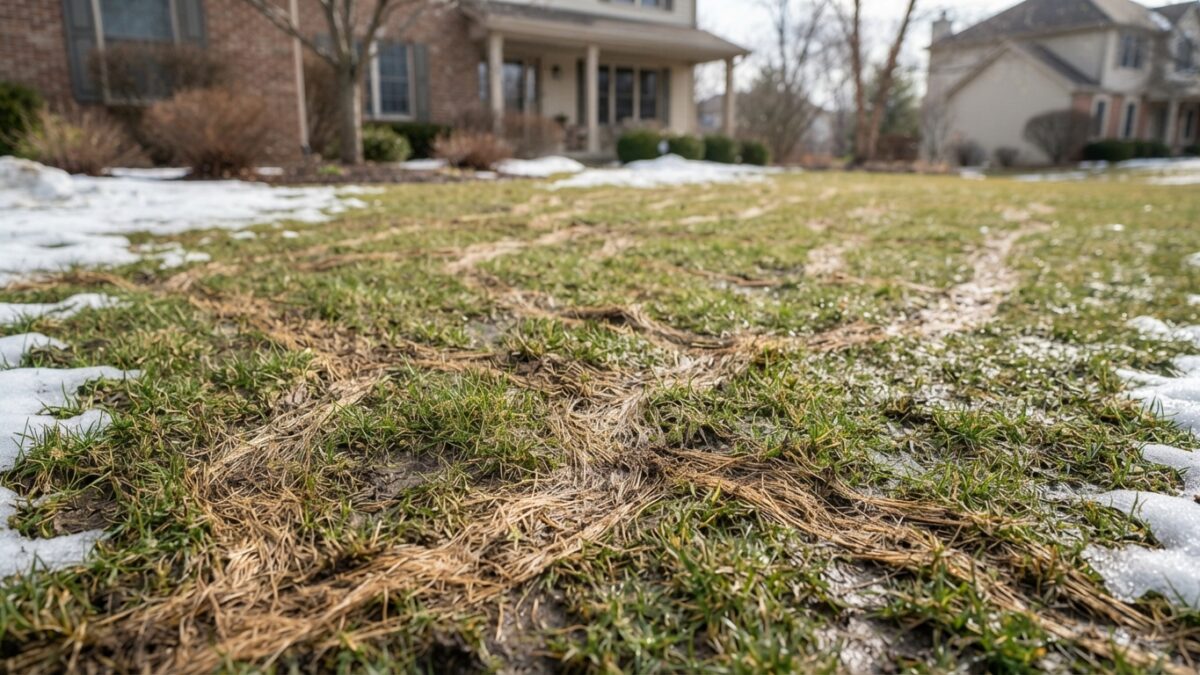
The winding, dead-grass trails that appear when the snow melts are almost always vole runways. Voles are small mouse-like rodents that tunnel through the grass under snow cover all winter. The good news, according to University of Minnesota Extension, is that lawn damage is “rarely permanent.” Rake out the dead grass in spring and reseed the bare runways. To prevent it, clear the cover they hide under before winter: woodpiles, debris and long grass. Guard young tree trunks above the snow line, and trap along runways if numbers are high.
Voles, sometimes called meadow mice, live under the snow from first snowfall to spring thaw. Snow hides them from hawks and owls, so they spend the winter eating grass blades and crowns and gnawing bark, leaving a map of trails that only appears when the snow melts. University of Minnesota Extension notes that a female can have 5 to 10 litters a year, and populations boom every 3 to 5 years. That’s why some springs are far worse than others.
This guide covers how to recognize vole damage, what to do this fall to prevent it, how to protect trees, and how to repair the lawn in spring. MowReview quotes no prices and hasn’t tested the products mentioned. How we research explains why.
Is it voles?
| Sign | What it looks like |
|---|---|
| Surface runways | Criss-crossing trails of dead or clipped grass, seen right after snowmelt |
| Grass stashes | Larger patches of dried grass used for food and nesting |
| Holes | Small openings about 1 inch across |
| Bark damage | Gnawing at the base of trees and shrubs, often hidden under snow, with tooth grooves about ¼ inch wide |
Moles are different: they leave raised ridges and volcano-shaped mounds of soil, not trails of clipped grass. UMN notes that voles sometimes use mole tunnels, so you may see both.
Prevent it this fall
Voles need cover. Take it away before the snow arrives and they’ll move elsewhere.
- Make the last mow a little shorter. University of Minnesota Extension says a slightly shorter final cut, but not below 2 inches, limits damage from voles and mice. When to stop mowing in fall covers the last mow.
- Clear woodpiles and debris from the lawn edges, as UMN recommends.
- Trim bushes up from the ground so there’s no sheltered strip beneath them.
- Clean up under bird feeders, or remove them, as UMN suggests. Spilled seed is an easy winter food supply.
- Rake heavy leaf layers off the lawn. A thick mat of leaves under snow is ideal vole cover. Mulching leaves with a mower explains how much the lawn can absorb.
- Pull mulch back from tree trunks so it doesn’t give voles a hidden route to the bark.
Protect your trees and shrubs
Bark damage is the serious part of a vole winter, because gnawing that circles a trunk can kill a young tree. UMN recommends a guard that is:
- Light-colored,
- Wrapped all the way around the trunk,
- Tall enough to reach above the winter snow line,
- Buried or banked with soil at the base, so voles can’t slip underneath,
- Loose, so it doesn’t constrict the trunk.
The same guards help against mower and trimmer damage the rest of the year. See how to mow around trees without damage.
Trapping
For heavy populations, UMN recommends standard snap traps set along runways or near tunnel openings and baited with peanut butter. Cover the traps, for example with a box or a short length of pipe, to keep pets, children and birds away. UMN notes that most recommended toxic baits are restricted to certified applicators, and any bait should go in a bait station.
Repair the lawn in spring
- Rake out the dead grass from the runways and patches once the lawn dries.
- Wait for warm soil. UConn’s home garden program says cool-season seed needs soil above 50°F to germinate.
- Reseed the bare runways and any patches where voles ate the crowns. UConn says to seed “these areas as well as runways worn down to the soil.”
- Keep new seed moist, and water deeply in dry spells, as UConn advises.
- Leave lightly damaged areas alone. UMN says surrounding grass will cover the trails as it grows.
Robot mower owners
Vole runways and holes can leave a lawn bumpy in spring. Rake and level them before the first robot run so the mower doesn’t catch or scalp. A robot mower’s first cut of the season covers the spring start-up.
The picks
UMN’s recommended trap
Victor wooden mouse snap traps
- TypeStandard snap trap, mouse size
- BaitPeanut butter
- PlacementAlong runways, near holes
The standard snap trap University of Minnesota Extension recommends for voles. Set several across active runways and check them daily.
Good for
- Active runways in late fall and early spring
- Gardens with a known vole problem
Less good for
- Open use around pets and children: UMN says to cover traps
- Population booms, where clearing cover matters more than trapping
For young trees and shrubs
White spiral tree trunk guards
- ColorWhite (light-colored)
- HeightChoose above your snow line
- FitLoose, expanding spiral
A light-colored guard that wraps the trunk matches UMN’s description. Purdue Extension adds that white, expanding guards also help trees withstand mower contact and reduce winter injury.
Good for
- Young fruit and ornamental trees
- Year-round protection from mowers and trimmers
Less good for
- Deep-snow areas if too short: UMN says guards must reach above the snow line
- Leaving unbanked: UMN says to bury or bank the base so voles can’t get under
For the spring repair
Spring-tine lawn rake
- TypeFlexible steel tines
- UseClearing dead grass from runways
- WhenEarly spring, once dry
Both UMN and UConn start the repair with raking out the dead grass. Flexible tines lift the thatch of clipped grass without tearing up the healthy turf around it.
Good for
- Vole runways, snow mold patches and matted grass
- Preparing bare spots for seed
Less good for
- Wet, soft lawns in early thaw: wait until the surface dries
- Leveling deep holes, which need a little topsoil
Questions
What are the trails in my lawn after the snow melts?
Usually vole runways. University of Minnesota Extension says criss-crossing surface trails seen in late winter and early spring, right after snowmelt, are the easiest sign of voles, sometimes with patches of dried grass used for food and nesting.
Will vole damage in the lawn grow back?
Usually. University of Minnesota Extension says lawn damage from voles is rarely permanent and surrounding grass will cover the trails as it grows. Rake out the dead grass and reseed runways worn to bare soil.
How do I prevent voles in my lawn over winter?
Remove the cover they hide under. University of Minnesota Extension recommends removing woodpiles and debris, keeping grass trimmed short and bushes trimmed up from the ground, and cleaning up under bird feeders. A slightly shorter final mow in fall also helps.
How do I protect trees from voles in winter?
Fit a guard. University of Minnesota Extension recommends a light-colored guard that encircles the trunk, reaches above the winter snow line and has its base buried or banked with soil, kept loose so it doesn’t constrict the trunk.
What is the best trap for voles?
Standard snap traps. University of Minnesota Extension says to set them along runways or near tunnel openings, bait them with peanut butter, and cover them to keep pets and children away.
When should I reseed vole damage?
In spring, once the soil warms. UConn’s home garden program says cool-season grass seed needs soil above 50°F to germinate, and to rake up dead grass and seed both damaged patches and runways worn to soil.
The short version
Trails of dead grass after snowmelt mean voles. Prevent them by clearing the cover they hide under this fall: debris, woodpiles, long grass, heavy leaves and spilled seed. Guard young trees above the snow line, trap along runways if needed, and in spring rake out the dead grass and reseed the bare runways. The lawn almost always comes back.