How MowReview makes money: As an Amazon Associate, MowReview earns from qualifying purchases, at no extra cost to you. We don’t test mowers ourselves; we explain what manufacturers and independent testers report. How we research
Quick answer
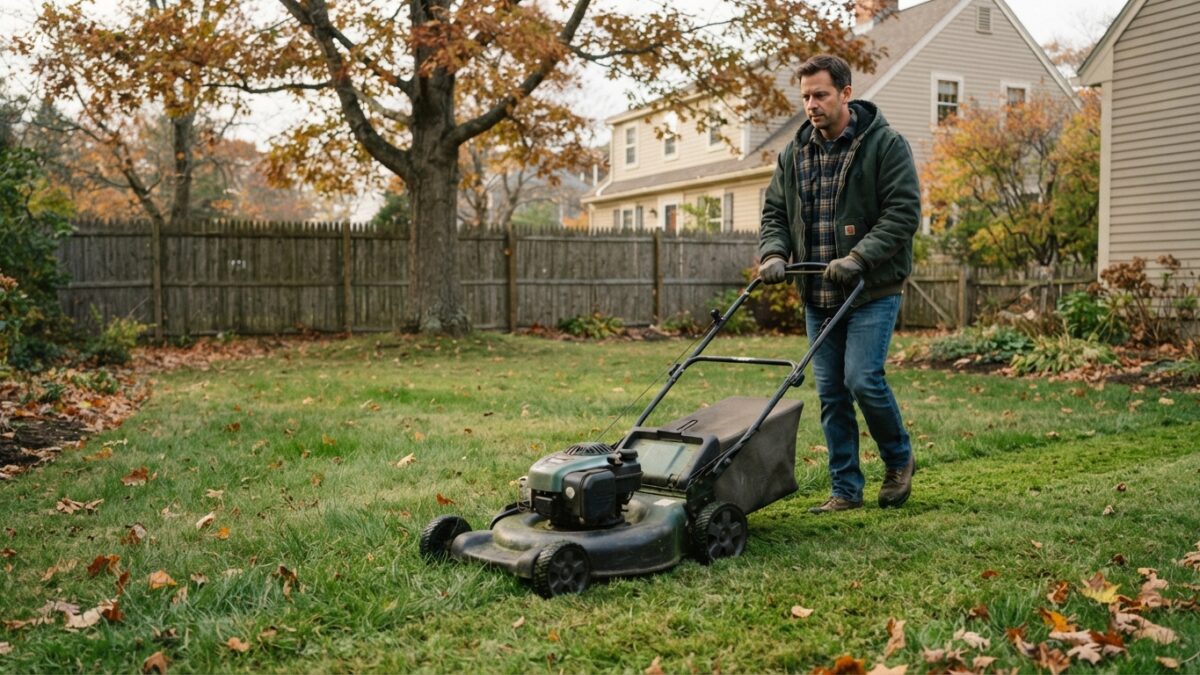
Stop mowing when the grass stops growing, not on a calendar date. In the Midwest that’s normally late October or early November, says Purdue’s turf team. For northern, cool-season lawns, make the last cut a little shorter than usual but never below 2 inches, as University of Minnesota Extension advises, and don’t scalp. Southern, warm-season lawns are mowed at their normal height until they go brown and dormant, and then they don’t need mowing at all.
There are two common mistakes at the end of the mowing season. One is putting the mower away too early, while the grass is still growing, which leaves long grass under the snow. The other is “scalping” the lawn on the last mow so it looks tidy all winter. University turf specialists warn against both.
This guide covers when grass actually stops growing, how short the final cut should be for northern and southern lawns, and what to do with the mower afterward. MowReview quotes no prices and hasn’t tested the products mentioned. How we research explains why.
When grass stops growing
Purdue’s former turfgrass extension specialist, Zac Reicher, put it simply: “keep mowing as long as the grass continues to grow, which is normally into late October or early November.” You’ll mow less often as the weather cools, but you shouldn’t stop while the grass is still getting longer.
The signs that the season is over:
- The lawn looks the same a week after mowing.
- Hard frosts are regular, not occasional.
- On a southern lawn, the grass has turned tan or brown.
Fall growth matters more than it looks. Purdue says photosynthesis stays high in cool fall weather, so the grass is busy storing energy for winter and the spring green-up. Every cut that removes too much leaf takes some of that store away.
How short to cut the last mow
| Lawn | Final mow | Source |
|---|---|---|
| Cool-season (Kentucky bluegrass, tall fescue, fine fescue, ryegrass) | A little shorter than usual, not below 2 inches | University of Minnesota Extension |
| Any lawn | Don’t scalp it | Purdue |
| Warm-season (bermuda, zoysia, centipede, St. Augustine) | Normal height or a little higher until dormancy | Clemson HGIC |
Northern lawns: a little shorter, never scalped
University of Minnesota Extension advises mowing “a little shorter going into the winter, but not lower than two inches.” A slightly shorter lawn reduces the risk of snow mold, makes it easier to collect leaves, and gives voles and mice less cover to tunnel under the snow.
Going too short has the opposite effect. Purdue warns against “the urge to set the mower down and scalp your lawn for the final mowing,” because it cuts off the leaf the grass needs to keep storing energy. And leaving the lawn long is a problem too: Purdue says unmowed grass encourages snow mold, a damaging turf disease.
In practice, if you normally mow tall fescue at 3.5 inches, drop to around 2.5 to 3 inches for the last cut or two. If you already mow at 2.5 inches, leave it there. See tall fescue and Kentucky bluegrass for normal heights.
Southern lawns: mow until dormant, then stop
Warm-season grasses work differently. Clemson’s Home and Garden Information Center suggests raising your mowing height by half an inch in mid-September if you aren’t overseeding, which helps shade out winter weeds and may encourage deeper roots. Keep mowing at that height until the grass turns brown. Once bermuda, zoysia, centipede or St. Augustine is dormant, it isn’t growing, so there’s nothing left to cut.
If you’re overseeding bermuda with ryegrass for winter color, the rules change: see mowing ryegrass over bermuda.
Don’t feed a lawn that’s going to sleep
Purdue Extension says to avoid fertilizer and broadleaf herbicides once the turf is dormant, because dormant grass can’t use them. For warm-season lawns, Clemson goes further: no nitrogen after September 1, because late growth is more vulnerable to cold damage.
After the last mow
- Deal with the leaves. Minnesota Extension says leaves left on the lawn block sunlight and trap moisture. Mulch light layers in with the mower, and bag or rake heavy ones. Mulching leaves with a mower explains how much is too much.
- Run a gas mower dry, or stabilize the fuel. Purdue Extension says fresh fuel in spring is best, so run the tank out in fall if possible.
- Use the winter for maintenance. Purdue suggests changing the oil and sharpening the blades over winter. Ohio State’s turf team recommends sharpening after every 25 hours of use, about twice a season.
- Store batteries indoors. For cordless mowers, see how to store a cordless mower battery for winter.
- Robot mower? See robot mower winter storage and the robot mower fall checklist.
The picks
If you can’t run the tank dry
STA-BIL Storage fuel stabilizer
- Stated lifeUp to 24 months
- Dose1 oz per 2.5 gallons
- FuelsEthanol and non-ethanol gasoline
Added to fresh gas before storage, it keeps the fuel from breaking down over winter. The maker’s directions say to run the engine for 5 minutes afterward so treated fuel reaches the whole fuel system.
Good for
- Mowers with fuel left in the tank at the end of the season
- Owners who store a gas can over winter
Less good for
- Old gas: the maker says it won’t restore or improve fuel that has already gone stale
- Rubber parts: the maker says it doesn’t prevent ethanol-related damage to seals
- Owners who can simply run the mower dry, which Purdue prefers
For northern lawns before dormancy
Scotts Turf Builder WinterGuard Fall Lawn Food
- TypeGranular fall fertilizer
- Best fitCool-season lawns
- TimingFall, while grass is still green
A fall feed for northern lawns, applied while the grass is still growing. University of Minnesota Extension says nitrogen is the nutrient that matters most for a lawn going into winter.
Good for
- Kentucky bluegrass and fescue lawns that are still green
- Owners who skipped an earlier fall feeding
Less good for
- Warm-season lawns: Clemson advises no nitrogen after September 1
- Dormant grass: Purdue says dormant turf can’t use fertilizer
- Lawns with enough potassium: Minnesota Extension says a winterizer’s benefit may then be minimal
For the winter blade job
Oregon Gator G3 replacement blade
- TypeMulching and bagging blade
- FitSold by length and mounting
- WhenFit over winter, ready for spring
Purdue suggests using winter to sharpen blades, and a blade that’s nicked or worn thin is a good candidate for replacing instead. Oregon markets the Gator G3 for mulching, bagging and side discharge.
Good for
- Blades that are bent, cracked or worn thin
- Owners who want better mulching next season
Less good for
- Guessing the size: blades must match your mower’s length and mounting
- Blades that only need an edge: a sharpening may be all they need
Questions
When should I stop mowing my lawn in the fall?
When the grass stops growing, not on a set date. Purdue’s turf team says to keep mowing as long as the grass grows, which in Indiana is normally into late October or early November. Northern lawns stop earlier and southern lawns later.
How short should the last mow of the season be?
A little shorter than usual, but not scalped. University of Minnesota Extension says to mow a little shorter going into winter but not lower than 2 inches. Purdue warns against the urge to set the mower down and scalp the lawn for the final mowing.
Why shouldn’t I scalp my lawn before winter?
Grass is still making and storing food in fall. Purdue says photosynthesis stays high in cool fall weather, and cutting off leaf tissue reduces the energy the grass stores for winter and spring.
Does long grass over winter cause snow mold?
It can make it worse. Purdue says unmowed grass encourages snow mold, and University of Minnesota Extension says a slightly shorter final cut reduces snow mold risk and discourages voles and mice.
Should I keep mowing warm-season grass in the fall?
Yes, until it goes dormant. Clemson’s Home and Garden Information Center suggests raising the mowing height by half an inch in mid-September if you aren’t overseeding, to shade out winter weeds. Once bermuda, zoysia, centipede or St. Augustine turns brown and stops growing, there’s nothing left to cut.
What should I do with my mower after the last mow?
Purdue Extension suggests running a gas mower out of fuel in fall, then using winter to change the oil and sharpen the blades. If you can’t run it dry, treat the fuel with a stabilizer.
The short version
Keep mowing until the grass stops growing. On a northern lawn, make the last cut a little shorter than usual but not under 2 inches, and never scalp it. On a southern lawn, mow at your normal height until the grass goes dormant, then put the mower away. Run gas mowers dry, take batteries indoors, and sharpen the blades before spring.
Thinking about next season already?
A robot mower keeps the lawn at one height all year, with no last-mow guesswork.