How MowReview makes money: As an Amazon Associate, MowReview earns from qualifying purchases, at no extra cost to you. We don’t test mowers ourselves; we explain what manufacturers and independent testers report. How we research
Quick answer
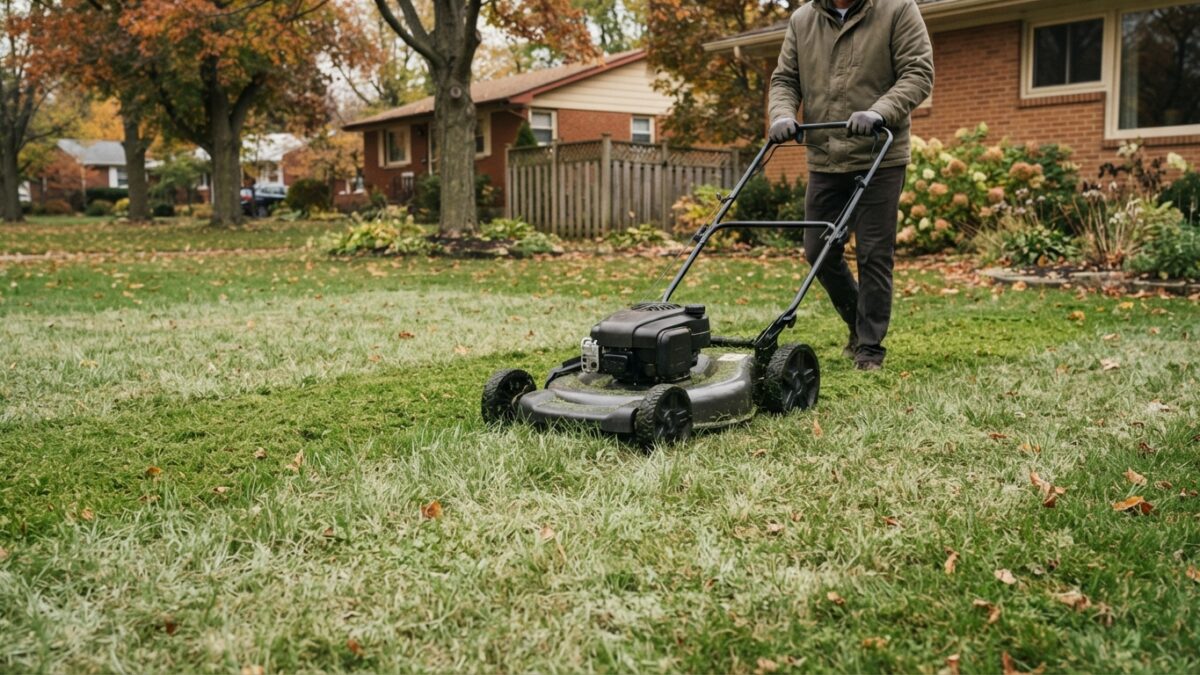
Make the first cut on fall-overseeded grass when the new seedlings are about one-third taller than your normal mowing height. For a lawn kept at 3 inches, that’s about 4 inches. Ohio State’s turf specialist says that usually takes four to six weeks after seeding. Use a rotary mower with a sharp blade, mow only when the grass is dry and the soil is firm, and take off no more than the top third. If winter arrives before the seedlings get that tall, leave them alone and make the first cut in spring.
Fall is the best time to overseed a northern lawn, which means October and November are when a lot of people stare at a patchwork of old grass and new fuzz and wonder when they can mow. Mow too soon and you pull up seedlings or rut soft soil. Wait too long and the old grass gets shaggy and shades out the new.
This guide covers when new grass is ready, how high to cut it, which mower to use, and what to do when the season runs out. It’s for cool-season lawns such as Kentucky bluegrass, tall fescue and perennial ryegrass. For southern lawns overseeded with ryegrass for winter color, see mowing ryegrass over bermuda. MowReview quotes no prices and hasn’t tested the products mentioned. How we research explains why.
When new grass is ready for its first mow
Ohio State University’s turfgrass specialist, Pam Sherratt, says new grass “can be mowed for the first time four to six weeks after seeding.” That window is shorter for irrigated lawns and longer in dry weather. Germination itself varies by grass: Pennington, for example, lists 7 to 21 days for its perennial ryegrass.
Weeks are only a guide, though. The real test is height.
| Your normal mowing height | First mow when new grass reaches |
|---|---|
| 2.5 inches | About 3.5 inches |
| 3 inches | About 4 inches |
| 3.5 inches | About 4.5 to 5 inches |
| 4 inches | About 5.5 inches |
Based on Ohio State’s example (first mow at about 4 inches for a 3-inch lawn) and University of Georgia advice to begin mowing when seedlings are 30% taller than the height you want.
Measure the new grass, not the old. In an overseeded lawn, the existing grass will reach mowing height long before the seedlings do. If the old grass needs cutting first, mow it with a sharp blade at your normal height on a dry day, and step carefully around the thinnest areas.
How to mow new grass without damaging it
- Sharpen the blade first. A dull blade tears young grass instead of cutting it. Ohio State recommends sharpening after every 25 hours of use, about twice a season.
- Use a rotary mower. Ohio State says the first mow is done with a rotary. University of Georgia advice is to switch to a reel mower, if you use one, only after the second or third mowing.
- Wait for dry grass and firm soil. Ohio State warns that where bare soil shows and the ground is wet, mower wheels cause ruts and other damage.
- Don’t turn sharply on new grass. Make wide turns, or turn on a path or driveway.
- Leave the clippings. Short clippings from a one-third cut fall between the blades and don’t smother seedlings.
- Hold off on weed killer. Most herbicide labels restrict use on new seedlings, so check the label before treating an overseeded lawn.
Mower weight matters on soft soil
On a lawn that’s been watered every day for germination, a heavy self-propelled mower is more likely to leave ruts than a light push mower. If your soil is still soft when the grass is ready, a lighter mower or a smaller deck that’s easier to turn is kinder to it.
If the season runs out
Overseed late enough, and the new grass may not reach mowing height before growth stops. That’s fine. Purdue’s turf team says to keep mowing as long as grass grows, and the corollary is that you don’t need to mow grass that isn’t growing. Leave seedlings at whatever height they’ve reached, keep the old grass from getting shaggy, and make the first proper cut in spring. When to stop mowing in fall covers the end of the season, and mulching leaves explains how to keep leaves from smothering new grass.
What about robot mowers?
A robot mower is gentle compared with a person pushing a heavy mower, but it runs often and turns on the spot, which can scuff seedlings and soft soil. Pause it while the seed germinates, and restart it once the new grass has had a few normal mows. Robot mowers on new sod covers a similar situation, and will a robot mower damage your lawn explains wheel marks and turning.
The picks
Any sharp rotary mower will do. These three, from Bob Vila’s hands-on electric mower tests, show the range from very light to full-size.
Lightest, for small overseeded areas
Ryobi 13-inch corded push mower
- Weight23 lb
- Deck13 in
- PowerCorded electric
Bob Vila lists it at 23 pounds, about as light as a rotary mower gets. That makes it easy on soft, freshly seeded soil and easy to steer around thin patches.
Good for
- Small lawns and patch-overseeded areas
- Soft soil where weight matters
Less good for
- Bigger lawns: Bob Vila says it isn’t built for sprawling backyards
- Working far from an outlet: it’s corded
Full-size cordless with a mulching deck
Toro 60V Max 22-inch Recycler
- Deck22 in
- DriveSelf-propelled
- Power60V battery
Toro’s Recycler deck is designed to cut clippings fine and return them to the lawn, which suits a one-third trim on new grass. You can also push it without engaging the drive for slow, careful passes over seedlings.
Good for
- Quarter-acre to half-acre lawns
- Owners who want to leave clippings on the lawn
Less good for
- Larger lawns on one battery: Bob Vila found runtime “solid but not class-leading,” about half an acre per charge
- Very soft soil: a self-propelled mower is heavier than a basic push model
Bob Vila’s top-rated electric mower
EGO Power+ 22-inch Select Cut
- Deck22 in
- Power56V battery
- BladesSelect Cut stacked blade system
Bob Vila’s testers found it stayed well balanced and cut cleanly. A clean cut is what matters most on new grass, because torn tips brown and stress seedlings.
Good for
- Midsize lawns where you want one mower for new and established grass
- Owners already on EGO’s battery platform
Less good for
- Soft soil: Bob Vila notes the larger battery adds some weight
- Tight patch work: a 22-inch deck is harder to steer around small seeded areas than a compact mower
Questions
How long after overseeding can I mow?
Usually four to six weeks. Ohio State’s turf specialist Pam Sherratt says new grass can be mowed for the first time four to six weeks after seeding, sooner on irrigated lawns and later in dry conditions.
How tall should new grass be before the first mow?
About one-third taller than your target height. Ohio State says that for a 3-inch target, the first mow comes when the grass reaches about 4 inches. University of Georgia advice for overseeding is the same idea: start mowing when seedlings are 30% taller than the height you want.
Should I use a reel or rotary mower on new grass?
A rotary mower for the first cuts. Ohio State says the first mow is done with a rotary mower, and University of Georgia advice is to use a rotary for the first mowing so seedlings are cut, not torn, then switch to a reel mower if you use one after the second or third mowing.
Can I mow new grass when the ground is wet?
Avoid it. Ohio State warns that where bare soil is visible and the ground is wet, mower wheels can cause ruts and other surface damage. Wait until the soil is firm and the grass is dry.
What if winter arrives before the new grass is tall enough to mow?
Don’t mow it. Leave the seedlings to go into winter at whatever height they’ve reached, and make the first cut in spring once they’re about one-third above your target height.
Can a robot mower mow newly overseeded grass?
Wait until the new grass is established. A robot mower runs often and turns on the spot, which can scuff seedlings and soft soil. Pause it during germination and resume once the new grass has had a few normal mows.
The short version
Wait until the new grass is about one-third taller than your normal height, usually four to six weeks after seeding. Mow with a sharp rotary blade, on a dry day, on firm soil, and take off only the top third. If the season ends first, leave the seedlings and make the first cut in spring.
Want the lawn mowed at one height all next year?
Find the right robot mower for your grass.