How MowReview makes money: As an Amazon Associate, MowReview earns from qualifying purchases, at no extra cost to you. We don’t test mowers ourselves; we explain what manufacturers and independent testers report. How we research
Quick answer
Not right away. New grass has to germinate and root before any mower drives over it, and a robot mower is no exception. Wait until the new lawn is established and long enough to take a light cut at a high setting, then introduce the robot gradually. On newly seeded areas within an existing lawn, set a no-go zone until the young grass is ready. Rushing it undoes the whole job.
Spring is when people lay new turf and sow new seed, and it’s a natural time to add a robot mower too. But new grass and robot mowers need to be introduced to each other carefully. Get the timing wrong and you can tear up seed, rut soft turf, or pull up young grass that hasn’t rooted.
MowReview isn’t a lawn-care service, and establishment times vary by grass and region, so your seed supplier or county Cooperative Extension office is the authority on exact timing. This is about how a robot mower fits around it.
Why you can’t mow new grass straight away
New grass, whether from seed or fresh turf, needs to root into the soil before anything drives on it. Until it has:
- Seed can be disturbed or dragged before it germinates and anchors.
- Young seedlings can be pulled out rather than cut, because their roots don’t yet hold.
- New turf can shift or rut under the weight and turning of a mower before it has knitted to the ground.
A robot mower’s frequent, light cutting is gentle once grass is established, but the machine still has weight and wheels, and those do damage on unrooted ground.
When is it safe to start?
The general principle for any mower applies: wait until the new grass is well rooted and has reached a height where you can take just the top off without cutting into the crown. For many lawns that means letting it grow taller than your normal height first, then taking a light cut.
The reliable test isn’t a date, it’s the grass:
- For new turf: it should be firmly knitted to the soil. Tug a corner gently; if it lifts, it isn’t ready.
- For new seed: the seedlings should be established and standing at a mowable height, not wispy and sparse.
Because exact timing depends on the grass type, the season and the weather, check the guidance from your seed or turf supplier. They’ll give establishment and first-cut timings for what you actually planted.
The first cut should be conventional, not robotic
Give new grass its very first cut with a conventional mower on a high setting, so you can control exactly where it goes and how much it takes. Robot mowers are designed for maintenance, not for a delicate first cut on establishing grass. Bring the robot in once the lawn has had a few normal cuts and is growing evenly.
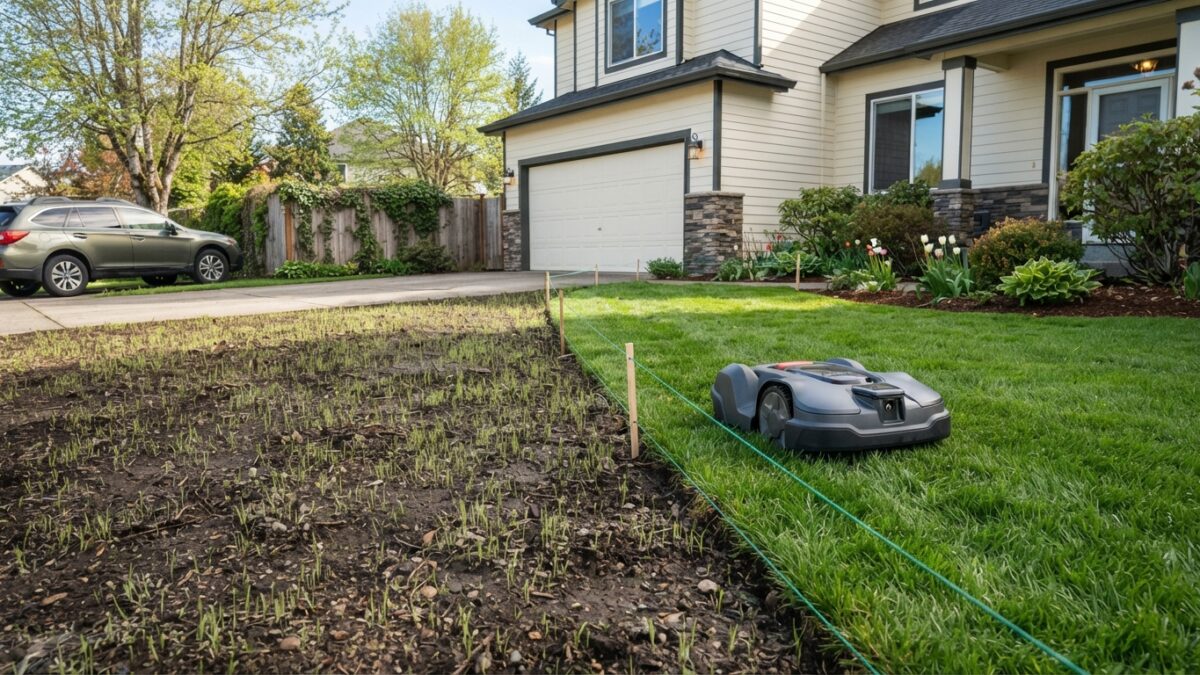
Newly seeded patches within an existing lawn
This is the more common situation: you’ve overseeded thin areas or repaired bare patches, but the rest of the lawn is mature and ready for the robot. The answer is simple:
- Set a no-go zone in the app around each seeded or repaired area.
- Let the robot mow the established lawn as normal, keeping clear of the new grass.
- Remove the no-go zone once the new grass is rooted and has taken its first conventional cut.
That lets you keep the robot working without setting back your repairs. It’s the same approach we recommend for fall overseeding in our fall checklist.
Easing the robot in
Once the new lawn is genuinely established:
- Start the robot at a high cutting height, well above your eventual target.
- Run a lighter schedule at first, and watch the early mows to check it isn’t slipping or marking the new grass.
- Lower the height gradually over several weeks, never removing more than about a third of the blade at once.
- Watch for soft ground, since new lawns are often on freshly worked soil that can rut. Hold off if it’s wet.
If you’re planning a whole new lawn
If you’re laying a lawn from scratch this spring and intend to use a robot mower on it, plan the mower’s needs into the project: a flat, even surface (which suits both the grass and the mower), a dock spot with power, and sensible widths between any separate areas. Our guide to getting your lawn ready for a robot mower covers that groundwork, and it’s far easier to build in now than to retrofit.
New to robot mowers entirely? Our guide to your first year, season by season maps out what to expect.
Questions
Can I use a robot mower on newly laid turf?
Not until the turf has knitted to the soil. If you can gently lift a corner, it isn’t ready. Once it’s rooted, give it a first cut with a conventional mower at a high setting, then introduce the robot gradually. Driving a mower over unrooted turf can shift or rut it.
How long after seeding can I use a robot mower?
Wait until the seedlings are established and standing at a mowable height, which depends on the grass type, season and weather. Your seed supplier or local Extension office gives the timing for what you planted. Give the first cut with a conventional mower, then bring the robot in once the lawn is growing evenly.
What about patches I’ve overseeded in an existing lawn?
Set a no-go zone around each seeded patch in the app so the robot avoids it, and let it mow the established lawn as normal. Remove the no-go zone once the new grass has rooted and had its first conventional cut.
Building a lawn the robot will love
A level surface and a good dock spot help the new grass and the mower alike.