How MowReview makes money: As an Amazon Associate, MowReview earns from qualifying purchases, at no extra cost to you. We don’t test mowers ourselves; we explain what manufacturers and independent testers report. How we research
Quick answer
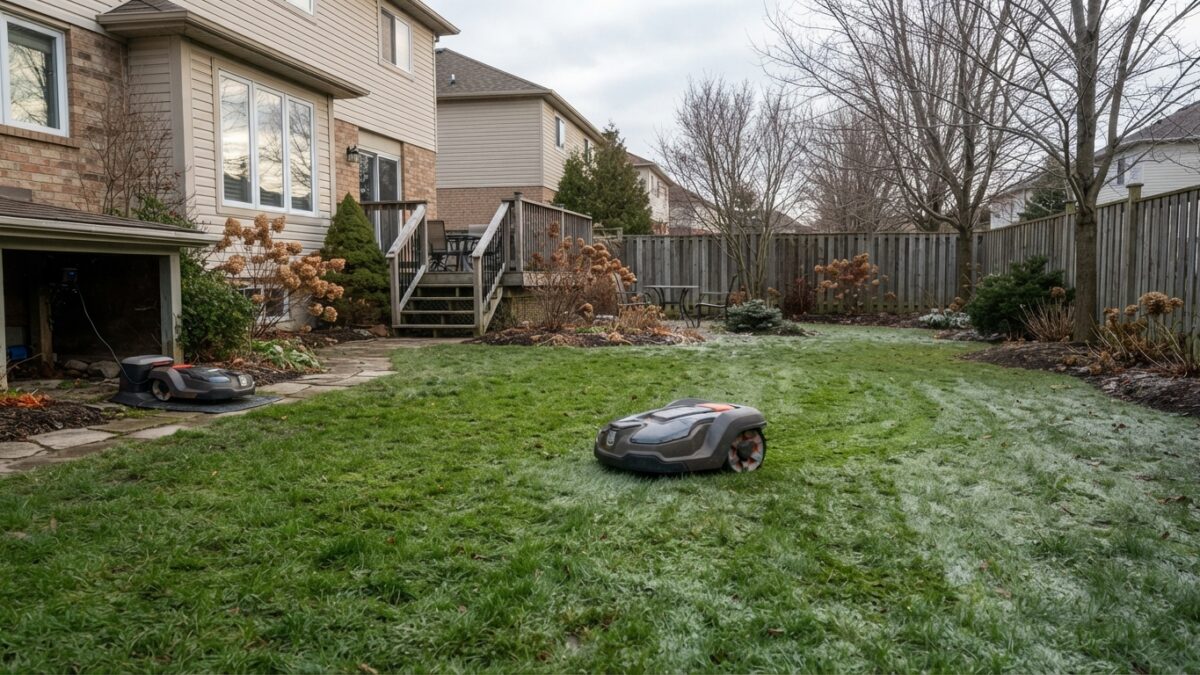
In a mild-winter region the grass slows but doesn’t always stop, and hard frost is rare, so the store-it-or-not decision isn’t clear-cut. The rule is still to mow only while the grass is actively growing and the ground isn’t frozen or waterlogged. Where growth pauses for weeks, store the mower even without a deep freeze. Where it keeps ticking over, reduce the schedule and use a frost setting for the occasional cold snap.
Most winter mower advice assumes one of two extremes: a hard northern freeze, or a warm South where the grass keeps growing. Millions of American lawns are in neither. The Pacific Northwest, coastal California, the mid-Atlantic seaboard and similar mild-winter zones get cool, wet, mostly frost-free winters where cool-season grass slows to a crawl without fully stopping.
If that’s your yard, here’s how to handle it.
MowReview hasn’t tested these mowers; the guidance comes from the manufacturers.
The rule doesn’t change, even if the answer does
Whatever your climate, the principle is the same: mow while the grass is actively growing, and stop when it isn’t. Husqvarna advises mowing as long as the grass is growing, and notes growth more or less stops around 40°F. Segway adds that near 41°F the ground can be hard or damp, which strains the mower and damages the lawn.
In a mild winter, the grass often sits right around that threshold: growing a little on warmer days, pausing on colder ones. So instead of a clean end to the season, you get a long, slow taper. The job is reading it correctly.
How to tell whether to keep going
Watch the lawn, not the calendar:
- Is it visibly growing? If the grass looks the same a week after mowing as the day after, growth has effectively stopped. Pause.
- Is the ground firm? A mild winter’s real problem is usually wet, not cold. Soft, saturated ground is a reason to stop regardless of temperature, because a mower on it causes ruts and compaction.
- Are cold snaps occasional or settled? An occasional frosty morning is fine with a frost setting. A settled cold spell means pause.
The wet-ground problem
In mild-winter regions, moisture matters more than temperature. Segway warns that cold, wet or frozen ground is not ideal for mowing, that it makes traction difficult, and that it can lead to soil damage, compaction or lawn marks.
So even on a frost-free but soggy December day, running the mower can do more harm than good. If your winters are wet rather than cold, let the ground be your guide: mow on the drier spells, and leave it alone when the lawn squelches underfoot.
Use a frost setting for the odd cold morning
Mild-winter regions still get occasional frosts. If your mower has a frost feature, such as Husqvarna’s Frost Guard, turn it on for the season. It parks the mower automatically when frost is forecast or detected, so an unexpected cold night won’t send it onto frosted grass while you’re not watching. More on that in do robot mowers work in snow and frost.
Should you store it at all?
This is the real question in a mild winter, and the answer depends on how long growth pauses.
- If growth stops for several weeks, store the mower, even without a hard freeze. There’s no benefit to leaving it docked outside through weeks of cold rain, where damp promotes corrosion on the contacts. Clean it, fit new blades and bring it in. Our winter storage guide applies.
- If it keeps ticking over, with the grass growing a little through the winter, you can leave it in service on a much-reduced schedule, mowing only on the drier, milder days. In that case, protect the dock from constant wet and keep the contacts clean.
A useful halfway option: store the mower but keep it somewhere you can bring it out for a mow if a mild, dry spell arrives and the grass has grown. You get the protection of storage without missing a genuine growth window.
Reduce the schedule rather than stopping dead
If you do keep mowing through a mild winter, cut back the frequency to match the slower growth. There’s no need to run daily when the grass is barely moving. Segway’s guidance for late-season mild conditions is to let the mower continue on a reduced schedule. Raise the cutting height too, which suits slow winter growth and is gentler on a lawn that’s under some stress.
Whatever your winter, cold is hard on the battery: see robot mower battery care in cold weather.
Not sure which zone you’re in?
If your winters are genuinely warm and the grass keeps growing properly, you’re really in year-round territory: see running a robot mower year-round in the South. If they’re cold enough for regular hard frosts and snow, treat it as a normal winter and store the mower: see the fall checklist and storage guide. This guide is for the in-between.
Questions
Should I store my robot mower if my winters are mild?
If growth stops for several weeks, yes, even without a hard freeze, because leaving it out through weeks of cold, wet weather promotes corrosion. If the grass keeps growing a little, you can keep the mower in service on a reduced schedule, mowing only on drier, milder days.
Can I mow when the ground is wet but not frozen?
It’s best avoided. Segway notes that cold, wet ground makes traction difficult and can cause soil compaction and lawn marks. In mild-winter regions, wet ground is usually more of a problem than cold, so mow on the drier spells and leave a waterlogged lawn alone.
How often should I mow in a mild winter?
Much less than in summer. Match the frequency to the grass: if it’s barely growing, a mow every week or two on the drier days is plenty. Raise the cutting height, and use a frost setting for the occasional cold morning.
Sources
- Husqvarna US support: Temperature ranges (growth stops near 40°F)
- Husqvarna: Automower support guide by season (mow while growing, reduce schedule, Frost Guard)
- Segway Navimow: When robotic lawnmowers take their winter break (hard or damp ground near 41°F)
- Segway Navimow: Cold and wet weather guidance (wet ground, compaction, lawn marks)
Decide by the grass, not the date
Whether you store it or keep going, the lawn tells you what to do. Here’s the full seasonal routine.