How MowReview makes money: As an Amazon Associate, MowReview earns from qualifying purchases, at no extra cost to you. We don’t test mowers ourselves; we explain what manufacturers and independent testers report. How we research
Quick answer
Expect a fiddly first few weeks while you map the lawn and iron out the spots where it sticks or misses. After that, summer is the easy stretch: it just runs. Fall brings leaves and debris to manage, and winter means cleaning it, changing blades and storing it indoors. The first year has the steepest learning curve; every year after is mostly routine.
A robot mower is a genuinely different way of looking after a lawn, and the first year is where you learn how it fits your yard and your life. Knowing what’s coming, and what’s normal, makes it far less stressful. Here’s the year ahead, season by season.
This guide ties together the detailed advice across the site, so think of it as the map.
Spring: setup and teething
This is the demanding part, and it’s all front-loaded. Expect to spend an afternoon on setup, and a couple of weeks fine-tuning.
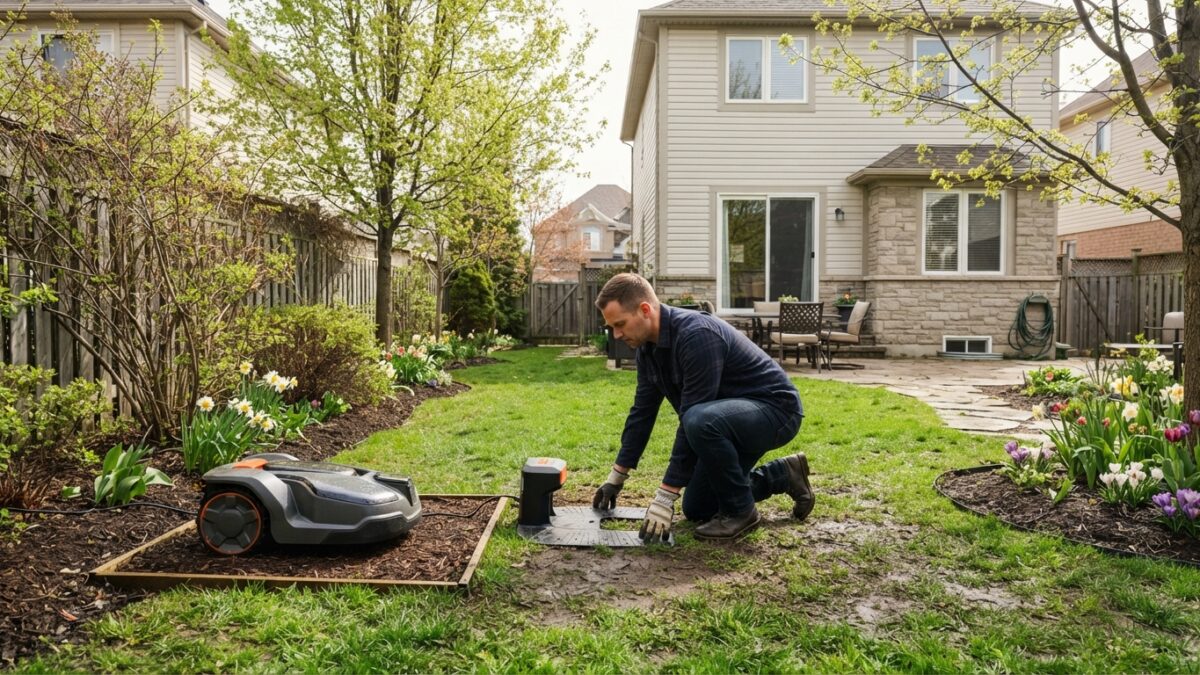
- Setup takes real time. You’ll site the dock and antenna, then walk the lawn edge with the app to map it. It doesn’t always go perfectly the first time; connectivity hiccups during mapping are common. Our guide on how to set up a wire-free robot mower walks through it.
- You’ll find the trouble spots. Most yards have a place or two where the mower sticks, slips or misses. This is normal and fixable, usually by filling a hollow, adding a no-go zone or moving the antenna. Preparing the ground first, as in getting your lawn ready, heads off most of it.
- Watch the early mows. Don’t set it and disappear at first. A few check-ins tell you what needs adjusting.
What’s normal: some trial and error, a couple of stuck episodes, edges left uncut. What isn’t: the mower repeatedly stranding itself in open, flat lawn, which usually points to a positioning problem worth solving (see RTK mower losing signal).
Summer: the easy stretch
This is the reward. Once the map is dialled in and the trouble spots are sorted, the mower mostly just runs.
- It becomes invisible. The lawn stays evenly cut, the clippings feed the soil, and you stop thinking about mowing. This is what you bought it for.
- A little upkeep. Check underneath every couple of weeks and clear clippings; wipe the charging contacts. Our maintenance guide covers the light routine.
- Adjust for heat and growth. In peak growth you may run it more; in a heatwave, keep it out of the hottest part of the day. Keep it on a daytime schedule.
- Edges. You’ll settle into a rhythm of occasional trimming, or you’ll have fitted a mowing edge in spring.
What’s normal: near-zero involvement. This is the season that sells people on robot mowers.
Fall: managing the debris
The mower keeps working, but the yard starts throwing things at it.
- Leaves. A light scattering mulches into the lawn and feeds it; heavy falls need clearing. See do robot mowers handle fall leaves.
- Acorns, cones and branches. Under trees, these need managing, and a walk round after windy spells prevents damage. See acorns, pine cones and pine needles.
- Raise the cutting height and shorten sessions as growth slows. The full routine is in the fall checklist.
- Change the blades. Fall is the natural time, ready for storage.
What’s normal: a bit more hands-on time than summer, mostly clearing debris.
Winter: rest and care
For most of the country, the mower stops for the season.
- Stop when growth stops, around 40°F, and before hard frost. Don’t run it in snow or on frosted grass (see snow and frost).
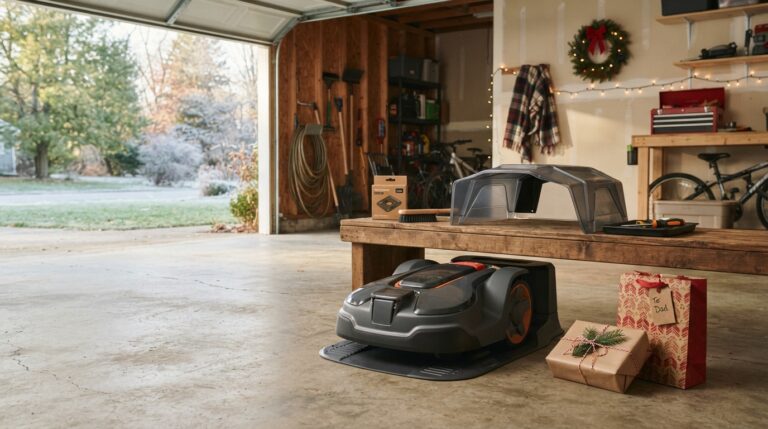
- Clean, blade, charge and store indoors. The full routine is in the winter storage guide, with a version for those without a garage.
- Mind the battery. Cold is hard on it; store it partly charged and never flat (see battery care in cold weather).
- Use the downtime. Winter is when to plan next year’s improvements and sort any repairs (see planning the season).
In the South, winter may be only a short pause; see running a robot mower year-round in the South and robot mowers in a mild winter.
If you’re buying this spring, the timing of sale events and when to bring a mower out both matter: see Presidents’ Day deals and when to take your mower out of storage.
The following spring: much easier
Year two is where it pays off. Bringing the mower out is quick, because the map and settings are already sorted and you know your yard’s quirks. The spring startup checklist takes minutes rather than an afternoon. The steep part of the learning curve was the first year, and you’re past it.
The honest first-year summary
The first few weeks ask the most of you, and it’s tempting to wonder if it was worth it. Push through the setup and the early adjustments, and by summer most owners forget they ever mowed by hand. The machine isn’t magic, and it has real limits, but the day-to-day payoff is real.
Questions
Is the first year with a robot mower difficult?
The first few weeks are the hardest: setup takes an afternoon, and you’ll spend a couple of weeks ironing out spots where it sticks or misses. After that, summer is nearly hands-off. Fall means managing debris and winter means storage, and every year after the first is much easier.
What problems are normal at first?
Some trial and error in mapping, the occasional stuck episode in a hollow or tight spot, and a strip of uncut grass along edges. These are normal and fixable. Repeated stranding on open, flat lawn is not normal and usually means a positioning problem worth solving.
How much work is a robot mower once it’s set up?
In summer, very little: a check underneath every couple of weeks and the occasional edge trim. Fall adds debris clearing, and winter adds cleaning, a blade change and storage. The ongoing effort is far less than mowing yourself, concentrated at the start and end of the season.
Sources
- PCWorld: Mammotion LUBA 3 AWD review (setup not always smooth)
- PCWorld: Ecovacs GOAT A3000 review (mapping connectivity, narrow spots)
- Bob Vila: The best robotic lawn mowers of 2026, tested (ease of living with different models)
- Husqvarna: Automower support guide by season (seasonal care, blades, frost)
- Segway Navimow: Maintenance and winterizing checklist
Just getting started?
Whether you’re setting up a new mower or choosing one, these guides cover the first steps.